
How To Beat the Crowds in Rome


An estimated 38 million tourists visited Rome last summer, and according to some sources, more than 80 percent of those travelers stuck to the Historic Center of Rome (Centro Storico di Roma)—the UNESCO World Heritage Site where the Vatican, Colosseum, Imperial Forum, and other archaeological sites bear witness to 2,000 years of splendor. Needless to say, Rome draws crowds. When the crush is too much to bear, or just enough to waylay your plans, fear not—these travel tips for avoiding crowds during your trip can help you explore Rome with a little more breathing room, even when it seems impossible.
1. Book skip-the-line tours and tickets to Rome’s most popular sights

The added cost is almost always worth it for easy access to Rome’s top landmarks.
Knowing how to avoid getting caught in long lines for the top attractions in Rome is essential. Purchasing skip-the-line admission tickets to the most crowded attractions sounds easy enough, but keep in mind that sometimes these are the first tickets to sell out. The details can vary, but these admission tickets typically allow you to bypass some ticket or admission lines, or all lines altogether. Skip-the-line bookings can include tours of top landmarks in Rome, or offer only priority admission to Rome's most crowded sites—either way, they can easily save you precious time.
2. Find Rome’s hidden gems

Seek out non-touristy things to do in Rome instead.
Sometimes, finding crowd-free attractions in Rome means visiting lesser-known—but no less dazzling—places near the world-famous sites. You can have a much more relaxed experience at spots such as the Golden House of Nero (Domus Aurea), an underground archaeological site just steps from the Colosseum; or the ruins of the Baths of Diocletian (Terme di Diocleziano) which were once among the largest public baths in Imperial Rome and are now part of the well-known National Roman Museum.
3. Get an early start, especially if you plan to visit Vatican City

The early bird beats the crowds at Vatican City’s top spots.
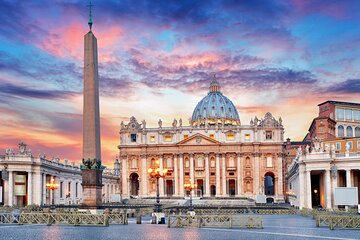
There are few more magical experiences in Rome—or Italy for that matter—than early morning tours of the Vatican. These intimate outings typically begin between 7–8am, before the Vatican Museums are open to the public, and explore the vast galleries, the Sistine Chapel, and St. Peter’s Basilica before the crowds have a chance to show up.
Insider tip: If you're not a morning person, some private tours of the Vatican visit after hours, instead.
4. Wait until night falls to meander around the city

You’ll have Rome’s top attractions to yourself after dark.
If you prefer to explore Rome later in the day, there’s no downside to heading out after dark: During summer, the unbearable daytime heat dissipates (a little); the attraction-attendant crowds tend to thin; and Romans don’t typically dine until well after dusk, meaning you won’t have to skip a nice meal.
An evening walking tour allows you to stroll past many of Rome's top landmarks lit up in their evening best. Don't miss the opportunity to take a nighttime tour of the Colosseum, when you'll see this iconic site glowing in the moonlight.
5. Go for a run—on your own or with a guide leading the way

Hit the pavement before the crowds wake to see the most of Rome’s outdoor landmarks.
There aren’t many quiet spots in clamorous Rome—unless you’re willing to get out of bed before most have sipped their morning espresso. For the athletically inclined, running tours are a great way to cover a lot of ground and see the most beautiful places in Rome nearly deserted. You can choose how you'd like to explore: Some of the experiences cut straight through the heart of the city—think the Colosseum, the Imperial Forum, and the Trevi Fountain—while others lead joggers through some of Rome’s loveliest green spaces.
6. Visit a Roman villa or park for an easy escape

Venture outside of Rome to escape the urban bustle.
Speaking of green spaces, Rome is full of them—and they’re often among the city’s loveliest crowd-free attractions. Within the urban core of the city, the Villa Borghese and Villa Doria Pamphili are first-rate attractions, and each offers their own art gallery. But outside the Aurelian Walls, the ancient Roman walls demarcating the Historic Center with the rest of the city, you’ll find larger open green spaces. The Via Appia Regional Park, for example, is home to the Appian Way (Via Appia Antica) and near beautiful aqueduct ruins surrounded by fields and greenery.
7. Avoid the high season (aka summer in Rome)

Rome is lovely—and less crowded—in spring, fall, and winter.
Many travelers preach it, but few listen: Don’t visit Rome in summer. Not only is the city most crowded during July and August—but it’s also debilitatingly hot with a windless heat that can make even the best-planned trips go awry.
During the off seasons, however, crowds are few, prices are lower, mind-numbing lines at the Pantheon and Vatican can be much shorter, and the atmosphere is often festive. Even winter brings memorable occasions, such as the midnight mass at St. Peter’s Basilica and the Piazza Navona Christmas market.
8. Explore tranquil residential neighborhoods in Rome

Enjoy authentic Roman life away from the crowds.
Wander off the beaten path to neighborhoods such as Testaccio, Prati, and Monti—three areas in the center of Rome and within walking distance to many top attractions. Monti, in particular, is worth a visit for its fashionable bar and restaurant scene and the Church of St. Peter in Chains (San Pietro in Vincoli), which is home to Michelangelo's Moses sculpture.
If you're looking to venture farther out, head to Ostia, technically Rome's most far-flung neighborhood. It's roughly 40 minutes from central Rome by train, and is home to Ancient Ostia (Ostia Antica), a little-known archaeological site that rivals Pompeii, at least in terms of size.
9. Ferry to the Pontine Islands

The best way to avoid crowds in Rome might be to leave altogether.
The six-island chain of the Pontine Islands, situated about 60 miles (100 kilometers) from Rome, is part of Lazio, the same region as Rome, and offers beaches and tranquil towns within striking distance of the raucous capital. You can travel by train down the western Italian coast to the right port of service, or book an island visit to cruise and swim around Ponza, the most-frequented island, with the logistics handled for you. Ponza, and the nearly uninhabited Palmarola Island nearby, are easy day trips from Rome away from the crowds in the city center.
Book more things to do in Rome




Keep planning your Rome trip


