
Know Before You Go: Visiting Diamond Beach


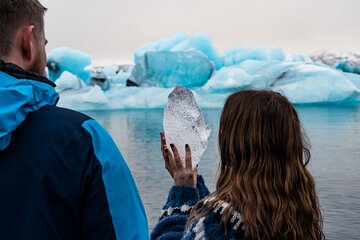
Ice, black sand, and water: it might sound simple, but throw those three ingredients together and you get Diamond Beach, one of Iceland’s most alluring destinations. This stretch of black volcanic sand on the southeast coast features chunks of glacial ice on shore that glitter like gemstones. How? Simple: Ice drifts over from the neighboring Jökulsárlón Glacier Lagoon, washes out to sea, and returns polished by the waves, creating a sparkling scene that shifts by the hour.
If you're sold on visiting, this Diamond Beach travel guide covers everything you need to know before stopping by—think: the best time to go, what to wear, and the prime photo spots.
Where is Diamond Beach?

Diamond Beach is located right off Iceland’s Ring Road, in the southeast corner of the country.
It’s rare for such stunning natural attractions to be so easily accessible, but on Iceland’s Ring Road—also known as Route 1—it’s the norm. Diamond Beach’s location is directly beside the Ring Road, right across from Jökulsárlón Glacier Lagoon, and about 234 miles (378 kilometers) southeast of Reykjavik—the journey takes about five hours by road (without stops).
More broadly speaking, Diamond Beach is situated in the wider area called Breiðamerkursandur, the outwash plain south of Breiðamerkurjökull, one of many glacier tongues that spill down from Vatnajökull, Iceland’s largest glacier, within Vatnajökull National Park.
Did you know?: Ingolfur Arnarson, Iceland’s first permanent settler, made landfall around 20 miles (32 kilometers) along the coast from Diamond Beach.
What should I expect at Diamond Beach?

At Diamond Beach, expect an otherworldly landscape of ice, black sand, and lots of people.
Diamond Beach is one of Iceland’s most famous attractions, so it can get pretty busy with people milling about as they admire the ice, the beach, and the lagoon, plus tour guides meeting customers for glacier hikes, snowmobile tours, or kayak trips out onto the glacier lagoon. Two paid parking lots are close to Diamond Beach—Eystri-Fellsfjara and Vestari-Fellsfjara—and both are just off the Ring Road.
As for what to expect on the beach itself, it’s a bit of a lottery. The amount of Diamond Beach ice that has washed up changes with the seasons, tides, wind, and temperatures. However, whatever the conditions, you can expect impressive views of the ocean, mountains, and several large glacier tongues.
When’s the best time to visit Diamond Beach?

The best time to visit Diamond Beach is late winter or early spring, during golden hour.
In summer, the ice that gathers on the beach melts faster; in winter, colder temperatures mean the ice melts more slowly and lingers longer. However, there’s no guarantee of how much ice will be on Diamond Beach during either season.
Many consider the sweet spot to be April: Glacial melt means more movement in the lagoon, but temperatures are still cold enough that the ice lingers on the beach. For timing, golden hour offers great photo opportunities as the light falls across the ice.
Insider tip: May and September, on either side of the summer, combine long hours of daylight with a good chance to see the northern lights as well.
Does Diamond Beach ever close, and do I need tickets?

You don’t need tickets to see Diamond Beach—it’s a natural attraction that never closes.
Diamond Beach in Iceland never closes—it's open 24 hours a day, year-round, as long as there are no weather warnings or road closures that make travel there impossible. There’s also no entrance fee or ticket booth. Parking is paid: you’ll pay around 1,110 kronur (US$9) for a regular car. The fee covers both lots at Diamond Beach—Eystri-Fellsfjara and Vestari-Fellsfjara—and the lot at Jökulsárlón until midnight the same day.
To pay for parking, you can use the Parka app or the on-site kiosks by the lagoon. And if you've already parked at Skaftafell earlier that day, you'll get 50 percent off fees.
Can I take a tour to Diamond Beach from Reykjavik?

Yes! Day trips and multi-day South Coast tours are available from Reykjavik.
While many people drive themselves to Diamond Beach during Iceland road trips, Diamond Beach and Jökulsárlón are also popular day-tour destinations from Reykjavik. It’s a long day, though: most excursions last 12–14 hours in total, as you travel to the lagoon and back. Tours may also stop at other sights along the way, such as Skógafoss and Reynisfjara Beach.
Multi-day tours of Iceland’s South Coast are a bit more relaxed, with an overnight stay or two on the way to and from Diamond Beach, and more time at attractions. Some excursions even venture into Skaftafell or stop at one of Iceland’s many hot springs.




What should I wear and bring to Diamond Beach?

Wear layers and make sure to bring a fully charged camera.
As with everywhere else in Iceland, dress for the wind at Diamond Beach. This is an exposed area of the country, and even in July, the breeze coming off the Atlantic or blowing down from the glaciers has a real bite.
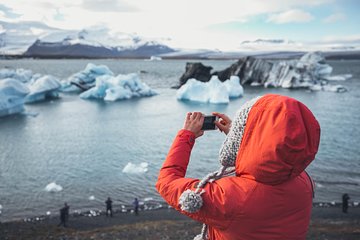
You’ll need a windproof jacket and warm layers underneath, plus a hat and gloves. If it’s raining, swap that windproof jacket for a waterproof one, and wear some rain pants as well. For your feet, opt for a good pair of boots or trail running shoes. And don’t forget to charge your camera before you set off, or pack a power bank. Diamond Beach doesn’t have on-site amenities, so carry some snacks and water, too.
Insider tip: If you’re going on a glacier hike, you’re required to wear boots with ankle support—check your tour details before setting off for guidance.
Is Diamond Beach safe to visit?

Diamond Beach is safe, as long as you respect the waves and stay off the ice.
The Atlantic Ocean crashing into Iceland’s coast demands respect. While not as dangerous as Reynisfjara Beach near Vik, waves can still take you by surprise at Diamond Beach. Also, be careful of jagged ice edges.
Most importantly, don’t climb on any of the icebergs, even if you’ve seen photos of others doing so. Strong waves can shift the ice suddenly; tourists have become stranded on icebergs surrounded by icy cold water before now.
How do I get the best photos at Diamond Beach?

Diamond Beach photography tips include getting low for different angles and visiting at golden hour.
The easiest tip for great photos at Diamond Beach is to visit at sunrise or sunset: Golden hours provide beautiful light for photographing the blues of the ice and the black sand. To make your shots even better, get low to the ground—you’ll capture the light passing through the ice, turning the stranded icebergs into glowing diamonds.
If you’ve got a DSLR or mirrorless camera, a tripod combined with a slow shutter speed can blur waves around the icebergs for a misty, fine-art look. Finally, whatever you’re using, protect it from the wind, rain, black sand, and sea spray.
Is Diamond Beach accessible?

Diamond Beach is partially accessible and can be viewed from the parking lot.
Diamond Beach is partially accessible for wheelchair users and travelers with limited mobility. The parking lots are close enough to the shore to view the beach, but there are no paved paths to the shoreline. The beach itself is made up of soft black sands; people who use wheelchairs are unlikely to be able to get close enough to touch the ice.
However, across the road at Jökulsárlón, the ground near the main parking area is flatter and firmer, and you can enjoy views of the glacier lagoon from your car here. There’s also an accessible café, while the parking areas on both sides of the road offer accessible spots.
What is there to do near Diamond Beach?

Glaciers, ice caves, and langoustines are all within an easy drive of Diamond Beach.
When it comes to things to see and do, Diamond Beach sits in one of Iceland’s richest corners. Jökulsárlón is the obvious first stop before or after you've been to the beach, as it's situated just across the road. Meanwhile, half an hour west is Skaftafell, home to some of the country’s best day hikes. At either location, you can join a variety of tours onto the ice cap, such as glacier hikes, snowmobiling, or in winter, expeditions into ice caves.
You can also explore glacier tongues, including Svínafellsjökull, and glacier lagoons such as Fjallsárlón and Breiðárlón farther inland.
Insider tip: Head to Höfn, a 1-hour drive from Diamond Beach, to feast on the area’s famous langoustines.
Frequently asked questions

Everything you need to know about visiting Diamond Beach.
Why is it called Diamond Beach? The beach appears to be covered in diamonds, thanks to the chunks of ice glittering in the light and contrasting with the black sand beneath.
Is there always ice on Diamond Beach? While there is always ice at Diamond Beach, the amount, size, and whether it's on the shore is never guaranteed. It’s all in flux due to the seasons, wind, tides, and weather.
Is Diamond Beach better at sunrise or sunset? It’s generally considered better at sunrise, as conditions are often calmer and there are fewer crowds than at sunset.
How far is Diamond Beach from Reykjavik? Diamond Beach is around 234 miles (378 kilometers) from Reykjavik. Driving between the two places takes around five hours without stops.
Book more things to do in Iceland





Keep planning your Iceland trip


