
Things to do in Greece

Things to do in  Greece

Land of gods and heroes

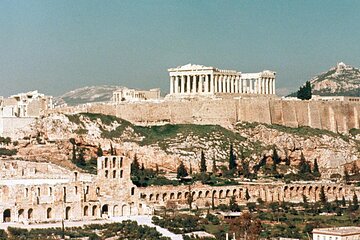
With the Mediterranean’s longest coastline, a forested interior, ancient cities, time-capsule villages, and roughly 6,000 islands, Greece offers all things to everyone. History and sightseeing buffs love AthensAcropolis temples and museums, Meteora’s rock monasteries, and the ancient Greek ruins at Delphi, Olympia, and Crete’s Palace of Knossos. But some of the best things to do in Greece involve slo-mo activities, be they on the mainland or islands. Laze on sandy and pebble bays, sunset-watch over Santorini’s caldera, explore the whitewashed villages of Mykonos or Rhodes, and linger at harborside tavernas.

Top 15 attractions in Greece

Top activities in Greece

All about Greece

Local Currency
Euro (€)
When to visit

Greek seas and skies shine bright and blue in June through August, when summer travelers flock to beaches, islands, and ancient sites. For a more zen experience, kinder prices, and easier travel, visit the Hellenic Republic in the shoulder seasons—late spring and early fall. Wildflowers can be magical in April and May, while September offers warm seas and tranquil weather.

Getting around

Most travelers reach Greece via the Athens International Airport. From there, lumbering car ferries to sleek, fast hydrofoils, and airy sailboat cruises are a magical way to explore the 227 inhabited Greek islands. On the mainland, there’s a limited but efficient train network, with KTEL buses linking major towns and cities. You’ll want your own wheels to discover villages, countryside, and some ancient sites, however. If hairpin bends, anarchic traffic, and cramped village streets are not your thing, consider hiring a driver or joining a tour.

Traveler tips

For the best views of the Acropolis archaeological site—and all the way across to the Aegean—head to Mt. Lycabettus, Athens’ highest hill, in time for sunset. If you take a wine tour anywhere in Greece, make it Santorini: The phylloxera louse can’t live in its volcanic soil, and its vines survived an epidemic that wiped out vineyards across Europe. The Gavalas Winery in Megalochori village is a great place to discover the island’s unique varietals.

en
86dc4c1d-8b48-4d30-9482-2ad5dc93187e
attraction_list
People Also Ask
Q:What is Greece famous for?
A:

The ancient cradle of Western civilization and home of the first Olympic games, Greece is renowned for its top-notch classical ruins, from Athens’ Parthenon to hillside Delphi. It’s also known for its verdant mountains, medieval Greek Orthodox monasteries, tiny villages, and lively towns—all giving way to a long coastline and groups of minor and major islands with idyllic beaches and azure seas.

Q:What is the number one tourist attraction in Greece?
A:

Greece’s top attraction is Athens, its capital, which had more than 6 million visitors in 2019. The city’s appeal is wide—from ancient relics to buzzing streets and food and nightlife. But travelers come mainly to see its most-visited site, the Acropolis, a rocktop crowned with archaic temples, including the Parthenon.

Q:Is 7 days enough for Greece?
A:

Yes, seven days is enough to cover the top things to do in Greece, but you’ll need to set expectations. Take a week’s tour of mainland highlights such as Athens and Delphi—focusing on one region like the Peloponnese, or island-hopping around Cyclades gems like Santorini and Mykonos. Alternatively, a week on an island, like Crete, offers beauty and culture.

Q:What is the most common thing to do in Greece?
A:

Travelers to mainland Greece usually focus on its historical sites, touring Athens’ antiquities before crisscrossing the interior to visit treasures like Delphi and Olympia. Relaxation-seekers, meanwhile, head for beach hot spots like Halkidiki and the Athens’ Riviera and Ionian Islands. Adventure seekers can take on Mount Olympus, Greece’s highest mountain, or Vikos Gorge and other national parks. Visitors to Greece’s islands lap up their sun, sea, scenery, and laid-back lifestyle.

Q:What food is popular in Greece?
A:

Across Greece, most tavernas serve popular classics like feta-topped salads, mezze bowls of hummus and tzatziki drizzled with local olive oil, and mains like moussaka, kebabs, and fresh fish. In the Ionian archipelago, Italian-influenced dishes such as pasta are popular, while Middle-Eastern favorites like stuffed grape leaves (dolmades) feature more in the Aegean islands.

Q:Do they speak English in Greece?
A:

Yes, English is generally spoken. In Athens and other cities—and at tourist sites and popular islands like Corfu, Crete, and Rhodes—English is widely spoken by waiters, shopkeepers, and tourism staff. If you’re traveling deeper into rural Greece, it’s wise to know and use everyday Greek words out of courtesy.