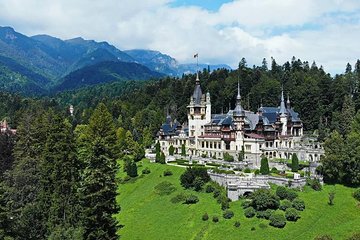
Peles castle, a Unesco World Heritage Site, in Sinaia, Transylvania

Things to do in  Romania

Get lost in the folklore

Encircled by the dense pine forests of the Carpathian Mountains, Romania emanates mist-shrouded majesty. In the countryside you’ll find glacier lakes, UNESCO World Heritage sites, and the Gothic cliff top castles of Transylvania—where legends of vampires and hauntings permeate the air. Among the rich cultural tapestry of Bucharest, you’ll discover an often overlooked European capital filled with culture and architectural charm. In Romania, the sixth-largest country in Europe, things to do include visiting top-class museums, getting lost among grandiose architecture wonders, and exploring picture-perfect parks.

Top 15 attractions in Romania

Top activities in Romania

Top Destinations

All about Romania

Time Zone
EEST (+2)
When to visit

The best time to explore Romania is from April through June, when the weather is pleasant and clear skies make for stunning vistas. This period is also before the European summer holidays, so you may get better deals on accommodations. Though the country is strongly associated with stories of the supernatural, Halloween isn’t a widespread celebration in Romania; however, Bran Castle hosts an annual All Hallows’ Eve party at the end of October, which draws ghouls from across the globe.

Getting around

It’s easy and economical to explore Romania by train—most of the country’s intercity trains are operated by a company called CFR and connect major cities and towns such as Bucharest, Sibiu, Brasov, and more. One driving route not to miss is the Transfagarasan Mountain Road, often hailed as one of Europe’s most scenic stretches of road. Opt for a tour that includes round-trip transportation so you can keep your eyes on the scenery rather than the road.

Traveler tips

Most travelers head straight to famous Transylvanian fortresses such as Bran Castle (often known as Dracula’s Castle) and Peles Castle. However, Corvin Castle fights for the title of the region’s most spellbinding structure—even with its unlikely location among an industrial landscape of steel mills. Expect terra-cotta turrets, a drawbridge, a Gothic hall filled with knight’s armor, and a chilling Bear Pit, all shrouded in grisly legend.

en
a4202041-4774-4d25-9773-a0560e3d7d79
attraction_list
People Also Ask
Q:What is Romania known for?
A:

Romania is best known for Transyvlvania, a mist-shrouded region of cliff top castles and Gothic churches associated with Bram Stoker’s Dracula. It’s also famous for natural highlights such as the Danube Delta and the Carpathian Mountains, and UNESCO World Heritage sites such as Sighisoara Citadel and the Churches of Moldavia.

Q:What are the most visited attractions in Romania?
A:

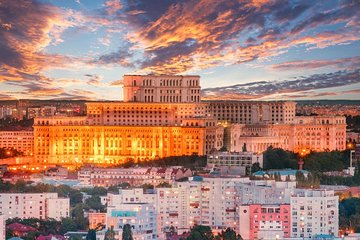
Bran Castle and Peles Castle in Transylvania both top the list of Romania’s most visited attractions, closely followed by the sprawling Palace of Parliament in the capital city of Bucharest and by the Merry Cemetery in the small village of Săpânța, where tombstones are hand-carved and painted in bright colors.

Q:How many UNESCO World Heritage sites does Romania have?
A:

Romania boasts a whopping nine UNESCO World Heritage sites—two are natural wonders and seven are cultural. Some of the most famous include the Sighisoara Citadel and Saxon village of Biertan in Transylvania; the Danube Delta, the second largest and best preserved river delta in Europe; and the 17th-century Horezu Monastery.

Q:How many days is enough for Romania?
A:

Allow five to seven days to experience the spectrum of Romania’s culture, nature, and history. You can delve into the communist history and grand architecture of Bucharest, explore the cliff top castles of Transylvania, go hiking in the Carpathian Mountains, and venture underground to the Turda Salt Mine (Salina Turda).

Q:What kind of food can you eat in Romania?
A:

Romanian cuisine is simple and hearty, and it provides the ideal fuel for hiking in the mountains. Local specialities include tripe soup (ciorba de burta), cabbage rolls stuffed with minced meat (sarmale), and pretzels rolled in salt and sesame seeds. Gogosi are a popular sweet treat similar to sugar-dusted doughnuts.

Q:Why is Transylvania known for vampires?
A:

Bram Stoker’s groundbreaking Gothic novel, Dracula, is the reason Transylvania has such strong associations with vampires. A portion of the novel is set in the Romanian region, which is depicted as the titular vampire’s place of residence. Because of this, Transylvania’s Bran Castle is often called “Dracula’s Castle.”