
Know Before You Go: Visiting the Accademia Gallery


There are a few copies of Michelangelo’s David displayed around Florence, Italy, but none compares to the real statue that anchors the Accademia Gallery (Galleria dell’Accademia). While the museum wasn’t built specifically for Michelangelo’s most famous sculpture, David is certainly its star attraction—and the reason why the Accademia Gallery tops nearly every Florence art museum guide. The collection’s other highlights, including paintings and plaster casts by other Italian masters, only sweeten the deal.
Understandably, the Accademia Gallery’s wealth of artwork draws tons of visitors every day, who line up in overwhelming numbers outside the entrance on Via Ricasoli. But don’t let lines or conflicting information deter you—with this guide, your visit can be as smooth as the Carrara marble used to sculpt Michelangelo’s masterpiece.
When’s the best time to visit the Accademia Gallery?

Mornings, especially during the quieter winter season, are the best time to visit the Accademia Gallery.
Generally, the Accademia Gallery is least crowded right at opening and shortly before closing, as most of the big tour groups arrive in the late morning and early afternoon. To enjoy the David sculpture in relative peace—and to avoid rushing through the museum—aim to book the first entry slot of the day.
Keep in mind that, as one of the most popular attractions in Florence, the Accademia Gallery draws crowds year-round. However, you can expect shorter lines and a wider variety of ticket options from November–February, when tourism slows in the busy Renaissance city.
What are the opening hours of the Accademia Gallery?

The Accademia Gallery is open every day except Monday.
Most Florence museum opening hours tend to be early (around 8 or 8:30 in the morning), and many of them are closed on Mondays, including the Accademia Gallery. From Tuesday–Sunday, it’s open from 8:15am–6:50pm, and you can enter up to 30 minutes before closing time. While these are the gallery’s standard hours, it does have special openings on a couple of Mondays throughout the year, so check the website before planning your visit.
If you reserve your visit in advance, which is highly recommended, be sure to arrive at least a few minutes before your 15-minute entry window so you have time to find the priority entrance and go through the security inspection.
Insider tip: While many major museums are closed on Mondays, many smaller Florence museums and churches remain open, making it a great day to explore sites such as the Florence Duomo (Cattedrale di Santa Maria del Fiore) or Galileo Museum (Museo Galileo).
What tour options are available for the Accademia Gallery?

Accademia Gallery tour options range from quick museum visits to full-day Florence sightseeing excursions.
For most travelers to Florence, the best way to see Michelangelo’s David is to reserve skip-the-line Accademia Gallery tickets that include a guided walk around the museum. These tours enlighten you about Michelangelo’s artistic process and the influence that his 16th-century David sculpture had on Renaissance art, typically in just 1–2 hours.
If you have more time to spare, see both of Florence’s top museums in one day on a small-group Uffizi and Accademia galleries tour. Other guides meet you for a walking tour of Florence’s highlights before taking you to the museum, which frees you up from figuring out how to get to the Accademia Gallery.


Do I need to buy Accademia Gallery tickets in advance?

Yes, buying tickets in advance will help you avoid long wait times at the Accademia Gallery.
It sounds simple, but one of the best Accademia Gallery tips is to plan ahead, so you can spend your museum visit admiring the artwork instead of waiting in line. Accademia Gallery tickets are available on the museum’s website, and we recommend securing your timed-entry reservation at least 2–3 months in advance. Of course, you can always try your luck with walk-up tickets, but you should be prepared to wait in a lengthy line.
Insider tip: You can’t reserve tickets online for free-admission days, which occur the first Sunday of each month and on some Italian holidays. On those days, only walk-up tickets are available.
How much do Accademia Gallery tickets cost?

General admission to the Accademia Gallery costs €16.
Regular tickets for the Accademia Gallery cost €20, plus a €4 service fee if you book online or over the phone. European Union citizens ages 18–25 get in for €2 with valid identification, while admission is free for all visitors younger than 18.
General admission to the Accademia Gallery covers a self-guided visit through the museum’s exhibits, but you can also rent an audio guide for €6. To save money, head there on free-admission days, which include the first Sunday of every month and select Italian holidays—just be aware that you’ll have to wait in line since online bookings aren’t offered on those days.
What should I wear and bring to the Accademia Gallery?

Comfortable shoes are key when touring the Accademia Gallery (and Florence in general).
There’s no official dress code for the Accademia Gallery, but visitors are asked to present themselves with respect for the formal artistic setting. Wear clothing that covers your knees and shoulders, which is the requirement at nearby churches such as the Florence Duomo anyway, and choose shoes that will keep you comfortable for a long day on your feet, both at the museum and while exploring Florence’s walkable historic center. Besides a small bottle of water and a camera for (non-flash) photos of David, pack light—the museum doesn’t have a storage service, and large bags aren’t allowed inside.
Is the Accademia Gallery accessible?

Yes, the museum is accessible for visitors with disabilities.
The Accademia Gallery is fully wheelchair accessible, with elevators and stairlifts to the upper floor and an accessible restroom on the ground floor. You can bring your own mobility device or borrow a wheelchair for free upon arrival, and service dogs are allowed with proper documentation.
The museum also has tactile maps and pathways for visitors who are blind and deaf, and it periodically organizes guided visits for guests with disabilities—check the website for more information. Note that visitors with disabilities and one accompanying guest get free priority admission to the museum, no reservation required.
What are the best artworks to see at the Accademia Gallery?

While Michelangelo’s masterpiece is the best-known piece of art inside the Accademia Gallery, there’s more to see.
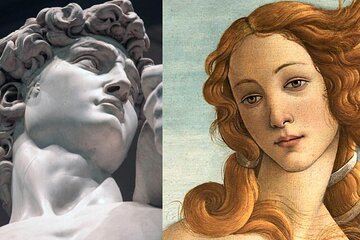
Michelangelo’s David is the Accademia Gallery’s Mona Lisa—it’s the piece that visitors immediately head toward after entering the museum. Standing nearly 17 feet (5 meters) tall, the lifelike sculpture is easy to find in the gallery’s ground-floor Tribune. Admire the masterpiece on your own, or learn why the city of Florence commissioned a young Michelangelo to make it on an Accademia tour. Don’t miss the museum’s other notable sculptures, including Michelangelo’s Prisoners series and Giambologna’s model for the Rape of the Sabine Women.
Lots of paintings stand out among the Accademia’s 13th- to 16th-century works. If you’re a Florentine-Gothic fan, look out for pieces by Giotto and Bernardo Daddi. Botticelli, Ghirlandaio, and Filippino Lippi headline the Renaissance collection.
Frequently asked questions

Everything you need to know about visiting the Accademia Gallery.
How long does it take to see the Accademia Gallery? Most visitors spend about 1.5 hours touring the Accademia Gallery highlights. In addition to Michelangelo’s famous David, be sure to check out the artist’s series of four unfinished sculptures known as either Prisoners or Slaves. The gallery’s other famous works include Lorenzo Bartolini’s 19th-century plaster casts, plus an assortment of gold-ground paintings by Giotto, Taddeo Gaddi, and other early-Renaissance artists.
What's the difference between the Accademia Gallery and the Uffizi Galleries? While the smaller Accademia Gallery is best known for one masterpiece in particular—Michelangelo’s David—the Uffizi Galleries are much larger and renowned for a variety of paintings by Botticelli, Raphael, Titian, and other Renaissance masters, plus ancient statues owned by the Medici family. Most travelers to Florence visit both museums, as they represent the city at its artistic height.
Book more things to do in Florence






Keep reading


