
Alternative Athens Founder Tina Kyriakos’ Insider Guide to Athens


For Alternative Athens founder and Athens native Tina Kyriakos, travel is less about bagging the big-ticket attractions and more about discovering how people really live in a place. She's after the everyday details that give cities their unique characters. “I want to peek through [people’s] windows, see what their homes look like, where they go on a weekday, and what they do when friends and family gather on a Sunday,” she says.
It’s a logic that feeds through to her own business, started in a city devastated by the 2008 financial crisis, which hit Greece particularly hard. “I was inspired by what would fascinate me in my own city: discovering what’s hidden behind closed doors,” she explains. “And the center of Athens has plenty of those secrets.”
Alternative Athens began as a counterpoint to the classic Athens tours, whistle-stop experiences that bag the best-known ruins fast but leave little time to encounter the real city. “Athens … [is] a city of multiple layers,” Kyriakos explains. “It’s not beautiful in the same way Rome, Paris, or Florence are, where you can spend weeks wandering museums and picturesque neighborhoods on your own. Athens is endlessly fascinating, but you need someone to help you peel back its layers.”
And, while Kyriakos would never neglect Athens’ long, proud history—“[it’s] like a cultural theme park”—her focus is very much on the sights and neighborhoods that get less coverage in the guidebooks. “I wanted to … offer an alternative to the classical, standard, stereotypical experience and show people a different side of the city—one that is authentic, insightful, and non-touristic,” she says. “My goal has always been to help visitors understand Athens beyond its famous sites.”
What to see and do in Athens

To get an overview of the city as a whole, Kyriakos recommends pairing Athens signatures—the Acropolis and its surrounding Plaka neighborhood, Monastiraki with its Ottoman-era architecture and bustling flea market, Psiri with its popular restaurants and bars, and the Athens Central Market—with less obvious neighborhoods such as fashionable Kerameikos, Pangrati, Koukaki, and Kypseli.
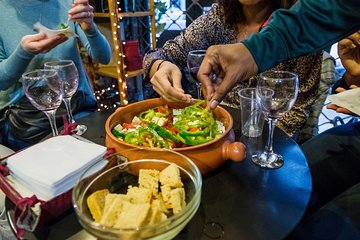
For Kyriakos, a Greek food tour is a must, “to taste some great foods and understand why food is so central to our culture,” she says, alongside a boat trip in summer “because the Greek sea is simply the best.” Sunset from the cliff-top Temple of Poseidon on Cape Sounion is another evergreen option. “It’s magical and you just don’t get anything like that in another European city,” she says.
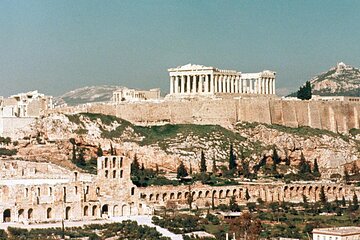
Beyond the signature ancient remains—the Acropolis, the Ancient Agora of Athens, the Temple of Olympian Zeus, the Panathenaic Stadium, and the Temple of Poseidon—she adores the serenity of the less-visited Kerameikos Archaeological Site. She also loves The Bathhouse of the Winds, a museum housed in a former hammam, an Ottoman-era steam bath. “It has a very special atmosphere and offers a different perspective on the city’s past,” she says. “Like Kerameikos, it remains largely undiscovered by visitors.”
Athens' museums are another go-to in this historic city. “If you’re into museums you can’t miss the Acropolis Museum, the Hellenic National archaeological museum, and the not-so-well known, my personal favorite, the intimate Cycladic art museum,” Kyriakos notes.
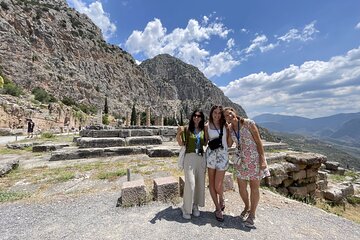
And it’s important to leave space in your schedule for day trips. “Delphi is one of the most extraordinary ancient sites in the world, with a mystical atmosphere that is difficult to describe until you experience it yourself,” Kyriakos says. A day on one of the nearby Saronic Gulf Islands, such as Hydra or Aegina, provides “a wonderful introduction to Greek island life.”
The best places to eat and drink in Athens

Classic Greek dishes such as souvlaki kebabs, tzatziki dip, and stuffed vine leaves have traveled the world, while the country’s olives, olive oil, yogurt, and honey are world famous. But there’s more to Athenian food than the obvious, Kyriakos argues. “Athens has an incredible food scene and far more options than most visitors realize.”
She suggests swapping the popular (but often touristy) Psiri, Monastiraki, and Plaka for “small tavernas in Petralona, contemporary restaurants in Koukaki and Metaxourgio, and local favorites in Exarchia.” For seafood, Piraeus’ fish tavernas are a must.
Athens presents a golden opportunity to discover Greek wine, Kyriakos says: “Greek wines are often poorly marketed internationally, but they are fascinating and diverse.” Her top spots include By the Glass Wine Bar & Bistrot, Oinoscent, Materia Prima Cava & Wine Bistro, Fteri Vinum Vinoteca, and Warehouse, as well as Paleo in Piraeus, “an especially interesting wine bar housed in a converted warehouse.”
Once you’re done wining and dining, Kyriakos recommends catching a concert on Mt. Lycabettus or in the waterfront Plateia Nerou, bar-hopping in Exarchia or Koukaki, or visiting a nightclub on the Athenian Riviera.
Where to stay in Athens

For short-term visitors who are staying only a couple of days, Kyriakos recommends basing in Koukaki or the Syntagma District. “Both are within walking distance of the city’s major attractions,” she says. “Koukaki is close to the Acropolis but still feels like a real neighborhood, with a lively local atmosphere and plenty of trendy cafés, restaurants, and bars. Syntagma, meanwhile, is the business and shopping heart of Athens, surrounded by excellent dining and nightlife options.”
For longer stays with space for sun, sea, and sand, Kyriakos recommends beachfront Glyfada. Or for an off-the-path choice, she highlights Piraeus, best known for its enormous cruise port. “I wouldn’t call it conventionally beautiful—except for its seaside areas—but it’s incredibly authentic and offers a genuine glimpse into the Greek character and way of life,” she says.
Annual events not to miss in Athens

If your cup’s not already overflowing with must-sees and must-dos, Athens has as diverse a calendar as you’d expect from any European capital. “The ‘This is Athens City Festival,’ which is held every May, features hundreds of free events throughout the city,” Kyriakos says. “In June, the SNF Nostos festival brings together discussions, performances, concerts, and activities for an international audience.”
The city’s long, hot summer brings international music artists as diverse as Jean-Michel Jarre, Limp Bizkit, Megadeth, and Nick Cave to Release Athens. For culture buffs, Kyriakos says, “The historic Athens and Epidaurus Festival offers hundreds of performances in some of Greece’s most remarkable ancient theaters.”
When to visit Athens

While summer is the peak period for travelers visiting Athens, Kyriakos recommends exploring during spring or fall instead. “The weather is wonderful and the crowds are smaller,” she explains. If you’re dead set on July or August, she suggests making the most of the evenings to beat the heat of the day. “Go to the Acropolis as late in the day as possible—ideally around 6:30pm.”
Although her tours are designed to optimize discovery, speed tourism is very much not Kyriakos’ style. She recommends staying at least three days and optimally five to really immerse in her city. “Athens is ideal for a five-day trip if you combine it with a couple of excursions—a visit to Delphi and a day trip to Hydra or Aegina islands,” she says. “That way, you experience the city, the islands, and the Greek countryside all in one journey.”
Her final tip: Let the flow take you. “Don’t be afraid to travel alone, travel spontaneously, or arrive without every detail planned. Athens has a way of making things happen for you!”

Book more things to do in Athens








Keep planning your Athens trip


