
A Culture Lover’s Guide to Vienna


For centuries, Vienna was the capital of one of Europe’s most prominent empires, providing it with ample resources to become a center of culture on the continent. The city is famous for its impact on classical music, but Vienna had just as profound an effect on art, architecture, food, and much more.
Today, the city remains a cultural heavyweight of Europe; you can’t walk more than a block in the Historic Center of Vienna (a UNESCO World Heritage Site) without finding a palace, museum, concert hall, or coffeehouse that's worth exploring. Since there’s so much to do in Vienna for culture lovers, we’ve assembled this cultural guide to Vienna to give you a broad idea of what awaits you.
1. Vienna Musikverein (Wiener Musikverein)

Don’t leave Vienna without catching a concert at Vienna Musikverein.
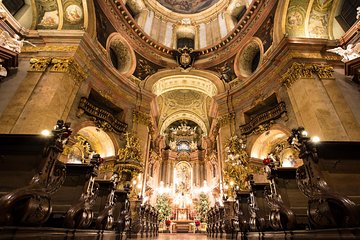
Classical music is part of Vienna’s DNA, and a concert at a magnificent venue, such as the Musikverein, is one of the best cultural experiences in Vienna. While there are many sites around Vienna where you can experience this side of the city’s heritage and hear works by Mozart, Beethoven, and Haydn, few offer the spectacle of the Musikverein and its Golden Hall, a richly decorated—and appropriately golden—space that wouldn’t look out of place in one of Vienna’s palaces. Ignore the ticket-sellers that roam the city center; prebook a concert at the Musikverein to ensure there's no funny business.
2. Hofburg Imperial Palace (Hofburg Wien)

Take your pick of museums in the vast Hofburg Imperial Palace.
The Hofburg Imperial Palace isn’t just a former residence of the Habsburg royals; it’s an entire cultural precinct in the city center. Various Vienna museums and galleries now call the palace home, giving you plenty of attractions to choose from, each with its own tickets and tours. Some attractions focus on the royals themselves, such as the Sisi Museum, or their shiny belongings—visit the Imperial Treasury of Vienna (Kaiserliche Schatzkammer) to see royal crowns and jewels. Other crowd-pleasers in the palace include the museum prints of the Albertina and the baroque halls of the Austrian National Library. There’s even a Papyrus Museum inside the palace with ancient Egyptian texts.
3. Spanish Riding School (Spanische Hofreitschule)

You’ll find equestrian performances in a grand imperial setting at the Spanish Riding School.
One last Vienna cultural landmark at the Hofburg deserves a special mention—the Spanish Riding School. This famed institution offers a unique cultural experience in Vienna, a holdover from the city’s Imperial days: Behind what are normally closed doors, visitors can watch equestrians with their special breed of Lipizzaner horses showcase their choreographed horse-riding art. Come see the morning training routine inside the vast baroque setting of the Winter Riding School or watch a formal performance accompanied by classical music.
4. Café Central

Yes, coffee and cake do count as culture—at least in Vienna.
Of course, culture isn’t just limited to “the arts”; it’s a reflection of the customs and habits of a people. And in Vienna, one of the most important cultural customs is visiting the city’s coffeehouses. These ever-present establishments have been part of traditional culture in Vienna for centuries, a place to socialize and enjoy downtime. Part of the appeal for tourists is when these coffeehouses look like Café Central, an upmarket venue centered around a patisserie display in the sophisticated Palais Ferstel, though there are a variety of cozy cafes to stop for a cup. For some added context as you discover the subtleties of Vienna’s café culture, join a guide on a coffee tour of the city.
5. Belvedere Palace (Schloss Belvedere)

Find Vienna’s most famous artwork in the baroque and beautiful Belvedere Palace.
The Belvedere Palace is one of the finest historical places in Vienna, best known for its carefully laid-out and scenic gardens. But there’s much more to be seen inside the Upper Belvedere Palace, which is now an art museum that boasts the city’s most celebrated work of art—Gustav Klimt’s The Kiss. By all means, admire this huge oil and gold leaf painting, but make time for the rest of its pieces, especially the wonderfully expressive sculptures of Franz Xaver Messerschmidt. Visit independently to take in the art at your own pace, or on a palace tour to learn more about the palace and its history.
6. Jewish Museum

Learn about Vienna’s Jewish heritage at the Jewish Museum.
Vienna’s many palaces reveal a specific and narrow part of the city’s history. But other Vienna cultural attractions do a great job of providing insight into other perspectives of the city’s past. A prime example is the Jewish Museum, which, together with the Jüdisches Judenplatz Museum, takes visitors through the experience of Vienna’s Jewish community and its many hardships since the Middle Ages. Combine your museum visit with a Jewish history walking tour for a deep dive into this chapter in the city’s past.
7. Vienna State Opera (Wiener Staatsoper)

The Vienna State Opera is an icon of the city and center of its performing arts scene.
Vienna is best known for its proud heritage of classical music, but venues such as the Vienna State Opera show that the city excels at other performing arts too. Yes, this magnificent Renaissance Revival building is more than just a prominent landmark on the city's Ringstrasse; it also offers a busy year-round calendar of opera, ballet, and concerts of many genres.
Insider tip: During summer, the State Opera holds regular free outdoor live recordings of its opera on a screen outside.
8. Vienna Secession

Explore an experimental art movement at the Vienna Secession.
Today, people generally think of Vienna as quite a traditional city, but that wasn’t always the case. Explore a time when Vienna’s art community was full of rule-breakers and rebels with a visit to the Vienna Secession. Under its glittering golden globe, this contemporary art museum tracks how the Secession movement shaped Vienna's art and culture at the end of the 19th century. Vienna art tours often visit the museum to see another of Gustav Klimt’s works, his Beethoven Frieze, an example of the Secession movement that wraps around an entire room.
9. Kunst Haus Wien

See a different side to Vienna’s architecture and art at the Kunst Haus Wien.
Vienna is home to many classical art institutions and museums, and then there’s the Kunst Haus Wien. Together with its companion, the Hundertwasser House, it forms a crack in the standard conservative look of the city’s architecture thanks to the eclectic designs of native-born Friedensreich Hundertwasser. With your entrance ticket in hand, you get the rare chance to see what one of his buildings looks like from the inside, not to mention browse its galleries of modern art.
10. Third Man Museum

Head to the Third Man Museum to explore Vienna's big moment on the silver screen.
While Vienna has starred in many movies and TV series, its most famous starring role is in the 1949 noir classic The Third Man. Fans of the movie can follow its characters with a ride on the Wiener Riesenrad Ferris wheel at the Prater, but an even better option is to visit the Third Man Museum in the 4th District. With your museum admission ticket, explore trivia about the city’s film industry and see memorabilia on display.
Did you know?: You can even do a “Third Man Tour” that takes you down into the city’s sewer system, just like the film’s antagonist.
11. Würstelstands

We’re all equal at the sausage stand.
When it comes to food culture in Vienna, dishes such as strudel, schnitzel, or Viennese-style cake normally take top billing. But it’s the city’s humble sausages sold at egalitarian street kiosks called würstelstands that UNESCO added to its Intangible Cultural Heritage list in 2024. Würstelstands sell a range of different sausages—from indulgent käsekrainer filled with cheese to the simple frankfurter served with a bread roll or semmel—which are —perfect for a post-concert or mid-pub crawl snack. You'll see the carts dotted around the city, though you can also stop by on a a food tour.
Insider tip: Avoid the würstelstand outside the Albertina; it always has a line of bus tour patrons.
Book more things to do in Vienna






Keep planning your Vienna trip


