
These Are the 7 Modern Wonders of the World—and How To Visit Them


If you could only choose a select number of bucket-list destinations, visiting the Seven Wonders of the Modern World would be a worthy option. These are places so grand—in architecture, importance, style, meaning, cultural heft—they hold no rivals nor imitators, and they need no introduction. They are humankind’s greatest creations: modern wonders edition.
But where an introduction is needed? Planning trips to the modern wonders of the world isn’t always obvious. With this guide, it’s easy—here’s how to visit some of the world’s most wondrous places.
1. Chichen Itza, Mexico

Chichen Itza is a striking archaeological site situated on the Yucatan Peninsula in Mexico.
Your modern wonders of the world guide begins with Chichen Itza, an ancient city that thrived more than 800 years ago. Once a global giant, today it stands as a massive Maya archaeological site, with 26 distinct ruins spanning 4 square miles (10 square kilometers). Located deep in the heart of Mexico’s Yucatan Peninsula, the UNESCO World Heritage Site offers an unparalleled glimpse into pre-Hispanic Mexico and the roots of the region’s Maya civilization.
Located just two hours from Cancun, this modern wonder also makes for a fabulous day trip from the Riviera Maya. Some Chichen Itza tours also include a visit to a local cenote, or water-filled sinkhole, a natural scene at the core of Maya culture (and great for a dip).
2. The Colosseum, Italy

You’ve seen it on film—now see this Roman pièce de résistance in person.
Human-made structures don’t get much more famous than Rome’s Colosseum, one of the best-known “modern” architectural marvels to visit. Nearly 2,000 years old, this world wonder attests to a time of gladiators, emperors, and the Roman legion. And while Roman amphitheaters dot Europe, the Colosseum was the largest, capable of holding up to 80,000 spectators.
Still reasonably intact, the Colosseum can easily be seen from the road, but the real magic happens inside. It’s an incredibly popular spot—skip-the-line tickets are a good start, but private or semi-private tours are the way to go to beat the crowds.
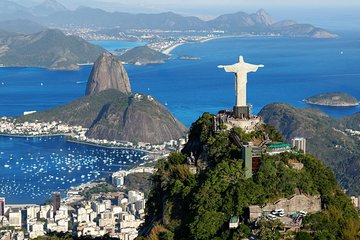
3. Christ the Redeemer, Brazil

You know a statue is good when it’s deemed a “wonder.”
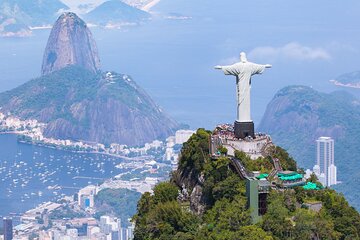
Somehow, Rio de Janeiro’s massive Christ the Redeemer Statue (Cristo Redentor) escaped being kitsch and instead became a world wonder. The 124-foot (38-meter) statue of Jesus is built high atop Corcovado Mountain, and the views up here certainly don’t hurt. From the statue’s platform, it’s nothing but city skylines, jungle, and ridges such as Sugarloaf Mountain (Pao de Açúcar) rising among the bright-blue waves of the South Atlantic.
Considering its popularity among the contemporary wonders of the world, visiting with a tour guide can assist with access. See the sight on a full-day Rio tour or grab skip-the-line tickets and skip worrying about getting in and getting around.
4. The Great Wall of China, China

The Great Wall of China can’t actually be seen from space, but you can still visit from solid ground.
Some 1,800 years ago, builders erected the 13,171-mile (21,196-kilometer) Great Wall of China—they just don’t make ‘em like they used to. One of the world’s greatest feats of engineering, the wall was built as border control; today, it’s a popular tourist site. In fact, it’s so popular, there’s a visitation limit on certain sections, like the Great Wall at Badaling near Zhangjiakou.
Despite the crowds, the Badaling section is still one of the best to access, largely thanks to tours from Beijing. For a more serene experience, choose farther-flung sections, or turn it into a hike.
Related: Know Before You Go: Visiting the Great Wall of China
5. Taj Mahal, India

The Taj Mahal really is the finest, marble-iest example of a man’s love—ever.
An absolute jewel of Islamic art, the Tah Majal is technically a mausoleum, though it could pass for a castle. (It was built in memory of Mumtaz Mahal, wife of Mughal Emperor Shah Jahan.) Surrounded by gardens on the banks of the Yamuna River, this 17th-century marble structure could hardly be grander—or more romantic—if it were built today.
Like the other must-visit modern wonders around the globe, the Taj Mahal is incredibly popular (you’ll notice a pattern emerging here). If you can, visit early and on your own—a private sunrise tour is about as good as it gets.
6. Petra, Jordan

A city built into rock. Need we say more about the beauty of Petra, Jordan?
Petra is famously described in poetry as “half as old as time,” and that’s just about right. An ancient city carved into rock—literally—Petra is by far the country’s most popular attraction. While the freestanding city is mostly gone (2,000 years will do that), the fantastic rock-carved tombs, treasury, and more still hide stoic in the cliffsides.
If you can, book a private tour for this one. At least for now, the “back entrance” is still noticeably less crowded—look for a pro guide who specializes in this ancient Bedouin trail.
7. Machu Picchu, Peru

Machu Picchu is the highest you’ll get exploring the Seven Modern Wonders.
The Mayas have Chichen Itza, and the Incas have Machu Picchu, a 15th-century city built at nearly 8,000 feet (2,438 meters) in the Andes Mountains. To get here requires tickets, going with a guide, and either a train ride or hiking the UNESCO–listed Inca Trail (or alternative routes)—but even with all that, it’s worth it to see one of the most famous archaeological ruins on the planet.
There are different ticket circuits to control visitation and flow, and guides can either be booked at the entrance or in advance. Let’s make one thing clear, though: Everything for Machu Picchu is typically best booked in advance. Plan this trip early, and start looking forward to a “wonder-filled” adventure.
Find more things to do in Central and South America






Keep reading


