
Know Before You Go: Visiting Rio de Janeiro for Carnaval


In Brazil, it's often said that the year doesn't start until after Carnaval—and there's some truth to that. Once the New Year's celebrations wrap up, the talking point turns to upcoming Carnaval preparations that progress just weeks after the year begins. Once Carnaval comes, the entire country goes into holiday mode; some people prefer to escape the cities for quieter destinations while others dive into days filled with festivities.
And nowhere does it quite like Rio de Janeiro, host to the largest carnival celebrations in the world. This Carnaval travel guide to Rio provides essential tips on what to know before visiting Rio de Janeiro for Carnaval, helping you get the most out of your experience.
Where does Rio’s Carnaval come from?

Rio's Carnaval comes from European pre-Lent festivals, later shaped by African influences.
Carnaval is more than just a party. In fact, Carnaval in Rio de Janeiro traces its origins to the pre-Lent carnivals that took place across Europe and were introduced to Brazil via Portugal. Over time, these festivities blended with African cultural influences brought by enslaved African people, such as samba music and dance.
Samba became a part of Carnaval in the early 1900s, eventually giving rise to samba schools—formal clubs—as groups of artists, composers, and dancers came together to showcase their skills. Today, Carnaval stands as a vibrant fusion of both Portuguese and African legacies, celebrated by millions every year and drawing visitors from all over the world.
What’s the best time to visit Rio de Janeiro for Carnaval?

Usually late February to early March, depending on when Ash Wednesday falls.
Carnaval happens once a year, typically in February or early March. The exact date varies each year because it’s determined by the date Ash Wednesday falls on, marking the start of Lent in the Christian calendar. In 2025, Rio Carnaval will run from February 28 to March 8.
The parades in the Sambadrome take place on Sunday (March 2), Monday (March 3), and Tuesday (March 4), starting at 10pm. Each night, four samba schools from the Special Group (the top-tier schools) will perform. The Parade of the Champions, on the following Saturday (March 8), will showcase the top six schools, performing again from 9pm onward.
What happens during Rio de Janeiro Carnaval events?

The city hosts all-night parades and street parties spanning a week.
For nearly a week, “business as usual” in Rio comes to a halt as millions flood the streets for the Carnaval parades at the Sambadrome (a 700-meter-long, avenue with grandstands for up to 90,000 people either side) as well as the blocos—intense, sexy street parties spread throughout the city.
But the celebration doesn’t start just on the official dates: Carnaval fever builds up weeks before. On the weekends leading up to the main event, smaller street parties give you a taste of what’s to come. You can also visit the samba schools (think of them as large samba teams) where groups do the last of Rio de Janeiro’s Carnaval preparations with parade rehearsals, letting you experience the music, dancing, and festive spirit up close.
What can I expect at the Rio Carnaval parades?

Expect elaborate floats, costumes, samba queens, and plenty of music and dance.
Rio’s 12 main samba schools spend the year preparing for the parades at the Sambadrome where they compete for the title of best samba school. The spectacle is one to remember with massive floats, elaborate costumes, and hypnotizing dancing and music. The Sambadrome is divided into 13 spectator sectors, with ticket prices varying depending on the view—the middle sections offer the best views, while sectors 12 and 13 are cheaper but less panoramic.
For an extra special experience, the VIP camarotes (boxes) offer food, drinks, and prime views of the parades. The parades usually begin at 9pm and continue until dawn, typically around 4–5am.
What’s the best way to get tickets for the Rio Carnaval parades?

Book online: The easiest option is a ticket with transit included.
You can book Carnaval tickets online, including for the VIP boxes. It’s best to book in advance to get a sector with the best views or a ticket for the Champions’ Parade that showcases the top six winning samba schools the weekend after the official beginning of Carnaval. To avoid worrying about logistics, such as getting to and from your accommodation, book a tour that includes tickets and transit for a hassle-free experience. Some tours also include other Carnaval-related experiences.



What can I expect at the street parties in Rio de Janeiro?

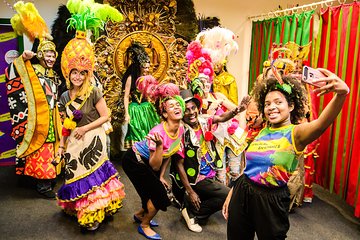
Packed blocos of music, dance, and costumes, with everyone welcome to join for free.
The street parties often start early in the morning and go on throughout the day until the early evening. They range from small, family-friendly gatherings to massive crowds of hundreds of thousands. Each bloco revolves around a truck blasting music, which is either stationary or moving slowly through the neighborhood with revelers following behind it.
Each party has its own name, music (usually samba), and often a theme, such as “Bloco Amigos da Onça” (Friends of the Leopard), where many partygoers match their costumes to the theme. Best of all, blocos are free and open to everyone—no ticket required. The bloco dates and times vary.
Insider tip: To find the best blocos, check out official sites, search on Instagram using relevant hashtags, or simply ask locals for their recommendations.
What are some Rio de Janeiro Carnaval tips for what to wear?

Think sparkly, tropical festival vibes with glitter, costumes, and comfy shoes.
For many, dressing up for the street parties is a highlight of Carnaval. It’s the time to unleash your creativity and embrace everything that sparkles and shines. Think festival vibes, but with a tropical twist. Popular outfits include hotpants over fishnets, tube tops, shorts paired with garlands, and glittery body and face art.
There are plenty of street stalls and fairs throughout Rio where you can buy glitter and Carnaval-inspired clothing. Leave the bag at home and instead use a fanny pack (bumbag) to store your essentials. For the parades, most people opt for comfortable yet festive attire—dresses, skirts, shorts, or tops paired with sandals, wedges, or trainers.
Are the Rio Carnaval parades and parties accessible?

Street parties can be challenging, but the Sambadrome is generally accessible.
Street parties can present challenges for individuals with health conditions or impairments, as they often become overcrowded and take place across roads, uneven sidewalks, and parks. Smaller blocos, as well as those where the truck remains stationary, tend to be more accessible.
Some areas within the Sambadrome are designed with accessibility in mind. Sector 13, for example, features dedicated spaces for wheelchairs, accessible restrooms, and ramps. Additionally, some VIP boxes offer inclusive seating, with designated areas for people with disabilities to view the parades near the runway. It’s always recommended to verify specific accessibility details when booking tickets.
What else can I do during Carnaval other than parades and parties?

You can enjoy a Rio Carnaval VIP experience at the Magic Ball gala at Copacabana Palace.
For an alternative Carnaval experience, go to the Magic Ball gala, held at the famed Copacabana Palace Hotel. Guests dress according to the event's theme, enjoy gourmet dining, and mingle with Rio’s elite. Expect to see the media and paparazzi outside seeking photos of local and foreign celebrities who attend. With stunning decor adorning every corner and a variety of music filling each room, it promises an unforgettable night.
Frequently asked questions

Everything you need to know about visiting Rio de Janeiro for Carnaval.
Is Rio Carnaval safe? Pickpocketing can occur during street parties. Carry only a small amount of cash, a card with a set limit, and an old phone for staying in touch, without risking your expensive device.
How can I get around? The subway is a convenient way to travel between neighborhoods in the South Zone. Uber is also popular and relatively affordable compared to Europe and the US.
Is Rio Carnaval LGBTQ+ friendly? Carnaval festivities are open and inclusive. Some neighborhoods are known for street parties that attract this community more, in particular Copacabana and Ipanena.
Can I participate in the Rio parades? Yes you can! Some tours allow tourists to join the parade and include costume fitting, rehearsals, and the chance to walk with a samba school.
Any other Rio Carnaval tips? Keep in mind that Carnaval takes place during the hottest months of the year, and it’s not unheard of for the temperature to reach at least 104°F (40°C).
Book more things to do in Rio de Janeiro













Keep planning your Rio de Janeiro trip


