
Know Before You Go: Visiting Haleakala


Haleakala Crater, the tallest peak on Maui, has long been a sacred spot for Native Hawaiians. Given its 10,023-foot (3,055-meter) height, many believe that the summit is home to Hawaiian gods. To this day, Native Hawaiians will venture to the peak of Haleakala to conduct their most important ceremonies and rituals.
Welcoming more than 1 million visitors each year, Haleakala summit in Haleakala National Park is filled with legendary landscapes, rare plants and animals, and unbeatable sunrise views. Before you head out yourself, give this Haleakala visitor guide a read for some tips on what reservations to make, what to wear, and what to do.
Is Haleakala worth a visit?

Yes, Haleakala is definitely worth visiting during your trip to Maui.
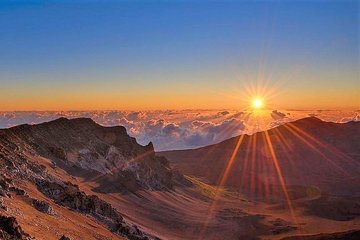
Haleakala is home to a wealth of natural beauty. Start your day with an unobstructed pastel sunrise before admiring the multicolored cinder cones from the comfort of the Haleakala Visitor Center. Or take to the Haleakala hiking trails, like the half-mile Hosmer Grove or the 11-mile (17.7-kilometer) Kenoeheʻeheʻe (Sliding Sands) Trail.
Along the way, search for all sorts of endangered plants and animals, including the ‘i‘iwi (Hawaiian honeycreeper), kiwikiu (Maui parrotbill), ʻakohekohe (crested honeycreeper), ʻohiʻa lehua tree, and māmane plant (sophora chrysophylla). Don’t miss the ‘ahinahina (Hawaiian silversword), which is only found on Haleakala and blooms just once in its lifetime. If you stick around long enough, you can catch a stunning sunset followed by a star-gazing dream sky.
How much does it cost to visit Haleakala National Park?

It depends on whether you enter on foot or by vehicle, but either way it’s affordable.
To visit Haleakala National Park, you’ll need to purchase a standard park pass, which costs US$15 per person or US$30 per vehicle and is valid for three days. Feel free to enter and exit Haleakala National Park as many times as you please during those days. However, this Haleakala park fee doesn’t include the US$1 for the sunrise reservation, which you’ll need to book separately from your park pass.
If you happen to have an America the Beautiful Pass, though, the price of admission to Haleakala National Park is included (though the price of the $1 sunrise reservation will still need to be arranged separately).
Do I need reservations for Haleakala National Park?

If you’re visiting for the sunrise, yes. If you’re not, no.
If you plan on entering the park between 3am and 7am (aka sunrise), you’ll need to make a special reservation. It only costs US$1 per vehicle—in addition to the general park entrance fee, of course—but getting the reservation is tricky because the demand is so high. Reservations open 60 days in advance at 7am HST, and you’ll ideally want to snag one then. There’s also a much smaller batch of Haleakala reservations that opens two days in advance at 7am HST. Be prepared to show your reservation confirmation and your ID at the Haleakala entrance toll booth.
If you plan on entering the park after 7am, you’re good to go—no reservations needed.
What tour options do I have for exploring Haleakala?

You may want a guide, especially if you’re bicycling downhill.
Lots of visitors opt to take a bus tour of Haleakala, because they’re intimidated by the drive. But the roads are pretty well-maintained, the drive is just two hours, and there are lots of pull-outs along the way. It’s definitely doable for the average driver. If the informative part of a tour is the draw, consider purchasing a Haleakala audio tour for a much more affordable price instead.
If you’re biking, on the other hand, you’ll definitely want to book a Haleakala Crater tour for two reasons. Most, if not all, Haleakala bike tours provide bus transportation to the Haleakala summit. The biking part comes in on the way back down, when you’ll pedal the 37 miles (59.5 kilometers) with the help of gravity. Since you can’t leave your car at the top, a tour is really the only way to go for the half-drive, half-bike Haleakala adventure.
The second reason is safety. Your guide will be able to point out potential hazards, like weather conditions and sharp switchbacks, along the way. However, if you’d rather explore independently, consider a self-guided option.







What is the best time to visit Haleakala?

Sunrise is, without a doubt, the best time to visit Haleakala.
At the tallest point on Maui, you’ll get an unobstructed view of the sun peeking out over the horizon—and the vivid colors that come with it. That said, sunrise is also the most complicated time to visit, as you’ll need to make the aforementioned sunrise reservation and make sure you leave early enough. My top Haleakala sunrise tip: Plan to leave your hotel three (if staying in Kahului or Paia) to four hours (if staying in Lahaina, Kaanapali, or Wailea) before sunrise. Without any sunrise traffic, it takes two hours from the base of the mountain to the summit, so the added hour or two will account for both the distance from your accommodation and the congestion you’ll likely encounter. An extra early start is the best way to ensure that you make it to the summit in time for the full experience.
If sunrise isn’t for you, Haleakala is still incredible at any other time of day. Midday is great for hiking, evening brings colorful sunsets, and after-dark is ideal for stargazing.
What’s the weather like at Haleakala?

Even though it’s in Hawaii, the weather at the Haleakala summit is *cold*.
On average, the temperature at the summit is about 30°F (-1°C) colder than at the base of the mountain, so bundle up! A warm jacket, long pants, and closed-toed shoes are musts at minimum. You’ll also want to slather on the sunscreen and bring a pair of sunglasses as UV rays are stronger at higher elevations.
What should I bring when visiting Haleakala?

There are just a few must-haves when visiting Haleakala: warm clothes, a mid-visit meal, and a full tank of fuel.
You already know about the chilly mountaintop weather and the need for warmer clothes, despite the fact that you’re in Hawaii. Since there isn’t any food available for purchase at the top of Haleakala, you’ll need a mid-visit meal. Depending on how early you plan on visiting Haleakala, you may want to plan ahead and purchase something the night before. Luckily, many local grocery stores—like Foodland and Times—have easy grab-and-go items.
And with the drive up and down the mountain, let’s not forget a full tank of gas. While it’s only 37 miles (59.5 kilometers) of driving from base to peak, the 10,000+ feet (3,000+ meters) of elevation really pushes a car’s gas tank to the limit.
Is Haleakala accessible for wheelchair users and people with disabilities?

Visiting Haleakala is somewhat accessible.
The visitor center includes designated parking spaces for people with disabilities, and Hawaii law allows visitors to use blue placards from other states and countries. Additionally, all of the visitor centers are wheelchair accessible, although the paths up them are quite steep. It’s important to note that these steeper sections may be tough for manual wheelchair users. While hiking trails are not wheelchair accessible, a coach tour often includes accessible surfaces.
The Headquarters Visitor Center also offers park brochures in Braille for visitors who are blind or have limited vision. A transcript of the backcountry orientation video is available for visitors who are d/Deaf or hard of hearing.
Should I visit the Oheo Gulch and the Pipiwai Trail (Kipahulu District)?

Yes, but on a different day from your visit to the Haleakala summit.
Most people don’t realize that Haleakala National Park is split into two sections, the Summit District and the Coastal District. The famed peak of Haleakala is in the former, while some highlights of the Road to Hana (Hana Highway), including the Oheo Gulch and the Pipiwai Trail, are part of the latter. This lush, rainforest-esque region is filled with waterfalls, bamboo groves, and ocean views that simply can’t be missed.
While you can’t get directly from the Summit to the Coastal District, you’ll still want to have this information in your back pocket. Since your pass is valid for three days, you’ll want to do the Road to Hana and Haleakala back to back. That way, you won’t have to pay the Haleakala National Park entrance fee twice.
Frequently asked questions

Everything you need to know about visiting Haleakala.
- How high is Haleakala? Haleakala is currently 10,023 feet (3,055 meters) tall, though scientists believe that it was once 15,000 feet (4,572 meters) tall!
- Will I get altitude sickness at Haleakala? You can get altitude sickness while driving to the top of Haleakala. If you know that you’re particularly prone to altitude sickness, stop at the first visitor center (right after the toll booth) for 30 minutes or so to give your body a chance to acclimate. Similarly, you don’t want to scuba dive the day before your visit to Haleakala; the drastic change in air pressure can cause decompression sickness.
- What does Haleakala mean? It means “house of the sun” in Hawaiian.
- What is the legend behind Haleakala? The Hawaiian legend of Haleakala starts with the demigod, Maui. His mother, Hina, worked tirelessly to create traditional kapa cloth, but the days were just too short for the cloth to dry. It turns out that La, the sun god, was being lazy. He was sleeping in and going to bed early, making the days shorter. Hina complained to her son Maui about it, and he came up with an on-brand, mischievous plan. When La finally got around to waking up the next day, Maui lassoed and captured him! La begged for mercy, and he and Maui came to an agreement. In exchange for La’s release, he would make the days longer, so Hina could dry her kapa.
- Can you hike to the top of Haleakala? You can, but it’s pretty unheard of. Called the Sea-to-Summit hike, there are a few variations that are all 13+ miles (21+ kilometers), cover 10,000+ feet (3,000+ meters) of elevation gain, and require at least two days of hiking. It’s not recommended.
- Can you take an electric car to the top of Haleakala? It’s not recommended. Most electric cars can’t make it to the summit, and there are no electric charging stations at the peak.
- When did Haleakala last erupt? Scientists estimate that Haleakala last erupted between 400 and 600 years ago. As a dormant volcano (as opposed to an extinct one), it may erupt again in the future.
Book more things to do in Maui







Keep planning your Maui trip


