
Know Before You Go: Visiting Gaudí’s Houses


Few cities wear their creativity as boldly as Barcelona, and nowhere is that more obvious than along Passeig de Gràcia, where Antoni Gaudí’s fantastical houses ripple and glow. Casa Batlló and Casa Milà (also known as La Pedrera) are among the finest examples of Gaudí architecture in Barcelona and cornerstones of the city’s Modernista movement, when colorful, nature-inspired masterpieces sprung up across the city as Catalonia redefined its cultural identity.
Both of these UNESCO World Heritage Sites are celebrated for their sculptural facades, shimmering mosaics, and organic forms. If you’re planning to visit, a few essential Antoni Gaudí touring tips such as timing, ticket types, and what to expect inside will help you make the most of these Barcelona architectural treasures.
When’s the best time to visit Gaudí’s houses?

Early mornings and evenings are the quietest times, especially in winter.
Both Casa Batlló and La Pedrera are among the busiest of Barcelona’s modernist attractions, so timing matters. Weekday mornings just after opening (8:30am for Casa Batlló; 9am for La Pedrera) are ideal for smaller crowds.
Spring (March–May) and fall (September–November) are less busy than summer, though winter offers the most peaceful experience. Evenings are another good option, with both houses offering a night experience with specialty lighting and fewer crowds.
Did you know?: Every April 23, Casa Batlló’s balconies are adorned with hundreds of roses for La Fiesta de Sant Jordi, a romantic Catalan holiday when couples exchange books and flowers.
How long does it take to visit Gaudí’s houses?

Plan for about 1–1.5 hours at each house.
A tour of Casa Batlló with the audio guide leading you through will take around 75 minutes, while La Pedrera typically requires about an hour, more if you want to linger on the rooftop taking in the views or spend extra time in the museum exhibit in the attic.
Visiting both in one go comfortably fills half a day along Passeig de Gràcia, with plenty of cafés and restaurants nearby for a break in between stops.
Did you know?: The rooftop of Casa Batlló was built to be strictly functional, but it’s now one of the most popular areas of the house.
Which Gaudí house should I visit?

Casa Batlló dazzles with color; La Pedrera impresses with scale and rooftop views.
Both houses should be a top priority on any Barcelona architecture itinerary, but if time is tight, Casa Batlló delivers big on the classic Gaudí experience: stained glass windows, flowing lines, and ocean-inspired detail.
La Pedrera, or “the stone quarry,” is grander and more sculptural, with its wavelike facade and rooftop chimneys that resemble knights’ helmets, but less colorful. Both are UNESCO World Heritage Sites and essential stops for anyone interested in Gaudí architecture in Barcelona.
Insider tip: For a lesser-known and quieter Gaudí house, check out Casa Vicens in Gràcia, one of the architect’s earliest works.
What tours and ticket options are available to visit Gaudí’s houses?

You can admire their stunning facades for free, but entry inside requires a paid ticket.
Both Casa Batlló and La Pedrera are a treat to enjoy from the street; crowds often gather outside both buildings, cameras in hand, to admire their facades, and both are included on architecture walking tours of Barcelona. But to see Gaudí’s craftsmanship up close, you’ll need to secure timed tickets to both houses. Slots fill quickly with visitors, especially in summer, so make sure to reserve at least a few days ahead.
Casa Batlló tickets come in four tiers, with more premium options unlocking bonus areas such as the rooftop. La Pedrera keeps things simple with just a single entrance ticket. However, both houses use timed tickets to keep the crowds flowing smoothly, and also offer special night tours.


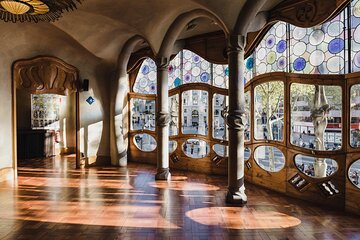
What can I expect on a tour of Casa Batlló?

Explore an underwater-inspired masterpiece and delve into its secrets room by room.
At Casa Batlló, you'll wander through the dreamy home filled with curving walls, shimmering tiles, and light wells inspired by the ocean, all of it topped by a dragon-backed roof terrace. The immersive audio guide, set to a score by British composer Dani Howard, brings the Batlló family’s story and Gaudí’s hidden symbolism into focus.
The tour leads from the gallery overlooking Passeig de Gracia to the vaulted Attic space to the Gaudí Cube in the basement, a 360º digital explosion of flashing lights and Gaudí-esque patterns. Premium ticket options unlock the Gaudí Dôme, an augmented-reality journey into his natural inspirations, plus access to the rooftop, the Batlló family’s restored private residence, and concierge room.
What can I expect on a tour of La Pedrera?

Step inside Gaudí’s imagination to admire wavy courtyards, restored living spaces, and wild chimneys on the roof.
At La Pedrera, you'll explore how Gaudí transformed the rough stone into a rippling, living sculpture. The self-guided visit is done via an audio tour, which leads you through the building’s most emblematic spaces: from the colorful Flower and Butterfly courtyards inside to the restored Tenant’s Apartment, a frozen-in-time look at the life of bourgeois Barcelonans in the early 20th century.
In the attic, an exhibition traces Gaudí’s creative evolution through his models and sketches, before the tour culminates on the rooftop, a forest of sculptural, mosaic chimneys and superb views over Barcelona.
What are the night tours of Gaudí’s houses like?

Specialty lighting, less people, and unique events await on the night tours.
For a unique experience with Barcelona art and design history, both the Gaudí houses also offer night tours. At Casa Batlló, winter is all about special projections, storytelling audio guides, and atmospheric lighting that reveals the house in a more special way. From March until November, its “Magic Nights” concerts take over the rooftop, with a twilight visit before drinks and a show.
On a night tour of La Pedrera, dazzling audiovisuals and lights are again used to highlight Gaudí’s unique architectural style, with the visit culminating in a dramatic light show on the building’s rooftop.
What should I wear when visiting Gaudí’s houses?

Comfortable shoes and layers make the visit easier.
There’s no dress code, but comfortable footwear is a must as you’ll be climbing stairs, walking across uneven rooftops, and exploring multiple levels. If you’re visiting outside of summer, a jacket is a good idea for both rooftops. Bags are checked at security, and large luggage isn’t allowed. A camera or smartphone is essential for capturing the curving and kaleidoscopic designs.
Did you know?: The attic of La Pedrera was originally built as a laundry room for the building’s residents, with the arches designed to allow heat and moisture from the drying clothes to circulate naturally.
Are Gaudí’s houses accessible for those with disabilities?

Both of Gaudí’s must-see buildings are accessible, but rooftops can have limited access.
Casa Batlló is fully wheelchair accessible, including its main floors and exhibits, with elevators connecting all areas. They also offer tablets with multilingual subtitles and specialized audio guides for visitors with hearing impairments.
La Pedrera has priority access, elevators, ramps, and even a wheelchair loan service on request. All areas of the house are accessible, though the rooftop’s uneven surface does limit access for wheelchairs, and viewing is restricted to a smaller area.
Did you know?: When La Pedrera was completed, it already included two elevators—very rare for a building in 1912—which helped pave the way for today’s accessibility features.
Frequently asked questions

Everything you need to know about visiting Gaudí’s houses.
- When were Casa Batlló and La Pedrera built? Casa Batlló was remodeled by Gaudí between 1904 and 1906, while La Pedrera was constructed from 1906 to 1912. Both belong to the peak period of modernism in Barcelona.
- Why is Barcelona so famous for Modernista architecture? Around the turn of the 20th century, the city was seeking to reaffirm its Catalan identity. Modernism’s colors, curves, and natural forms became a defining visual expression of that cultural shift.
- Are tours available in English? Yes—both houses offer multilingual audio guides in English.
- Can I take photos inside? Yes, you can take photos inside both houses, as long as it’s for personal use.
- What other Gaudí architecture in Barcelona should I see? Don’t miss the Sagrada Família, Park Güell, and Casa Vicens, another of the top Gaudí houses to visit, for a full view of Gaudí’s creative evolution.
Book more things to do in Barcelona





Keep planning your Barcelona trip


