
Know Before You Go: Going Whale Watching in Mexico


Each year, thousands of whales migrate southward along the Pacific Coast from the Arctic to the warmer waters of Mexico, where you’ll find some of the best whale watching in the world—more than 33 whale species have been documented in Mexico’s Pacific waters alone.
There’s no denying that these marine mammals are awe-inspiring, and spotting them in the wild is a bucket-list item for many travelers. But the trick is to know when and where to go. Here are some whale-watching tips for Mexico to help you optimize your chances of observing these incredible creatures in their natural habitat.
Where should I go whale watching in Mexico?

Whales frequent several spots in Mexico, including Baja California and Puerto Vallarta.
Several of Mexico’s most popular beach destinations are also prime whale-watching spots, which means you’re spoiled for choice on where to go. Puerto Vallarta and nearby Sayulita are great options for spotting humpbacks, which migrate down to Banderas Bay to mate and give birth.
Baja is a top spot for experiencing the gray whale migration in Mexico, as gray whales arrive to calve in the Sea of Cortez. You can see them on whale-watching tours from Los Cabos, Todos Santos, and La Paz, which are all plentiful with surfing, beach, culinary, and cultural adventures as well.
Related: 10 of the Best Places To Go Whale Watching Around the World
What’s the best time of year to go whale watching in Mexico?

Whales are typically seen in Mexico during the winter months.
Whale-watching season in Mexico typically runs from the end of November through March. The exact timing varies slightly per region of Mexico and species of whale, although you can generally expect to start seeing whales in late November or early December.
For example, Pacific gray whales, which spend the summer months feeding in the Arctic waters around Alaska, make their southward journey down the West Coast in September or October. They arrive in Baja California Sur around December, lingering in sheltered, warm lagoons to give birth, making the winter months here the best time for whale watching in Mexico.
What time of day should I go whale watching in Mexico?

You’ll likely see more whale activity in the afternoon, although mornings bring calmer waters.
Whale-watching tours are offered throughout the day, so you can find a time that fits best for your schedule. Morning whale watching often sees less boat traffic and has calmer seas, which is optimal in some ways: Being out on choppy waters isn’t much fun and can make spotting whales more challenging.
Afternoons, on the other hand, typically experience more wind and waves, but they also often bring more whale activity. If you can stomach the rough seas, you might see some exciting things, such as breaching and fin slapping. Just keep in mind that nothing is guaranteed—weather or whale-wise.
What tour options are available for whale watching in Mexico?

A variety of tours are available to optimize your whale-watching experience in Mexico.
Although you can try your luck at spotting whales from shore, your best chance at seeing whales in Mexico is to book a guided tour. Boat tour operators use their local expertise to track the movement of the whales and bring you to spots where whales have recently been seen.
There are plenty of Mexico whale-watching tours to choose from, and many excursions have marine biologists on board who provide commentary about whale behavior and the local ecosystem. Plus, you’re likely to see other Pacific marine life such as dolphins, turtles, mantas, and even orcas if you were to take, for example, a dolphin- and whale-watching tour in Puerto Vallarta.


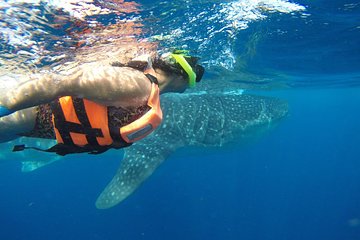




Am I guaranteed to spot whales in Mexico?

Whale sightings are never guaranteed, but are likely with a good tour guide.
Remember that whale-watching tours take place in the wild, and nature is unpredictable. However, if you visit the right regions during whale migration season, whales will be in the local waters—it’s a matter of spotting them.
Boat captains and naturalist guides use their local knowledge and familiarity with whale activity, including recent sightings, to maximize your chances of spotting whales. Some tours also offer guaranteed sightings, so if you don't spot any whales on your tour, you can come back another day.
What should I wear to go whale watching in Mexico?

Come prepared for sunshine, wind, and ocean spray during a whale-watching cruise in Mexico.
Weather can be unpredictable on whale-watching excursions in Mexico, so come prepared for a bit of everything. Wear light, waterproof layers that will keep you warm if it’s windy on the boat and dry in case you get splashed by water. Layers are convenient to peel off on a hot, sunny day. Sunscreen, a hat, sunglasses, and waterproof sandals are also recommended for your day on a whale-watching boat to stay protected from sun exposure.
Is whale watching in Mexico accessible for wheelchair users?

Yes, but a limited number of boats are sized to accommodate wheelchairs.
Unfortunately, wheelchair accessible whale-watching tours in Mexico are the exception rather than the rule: Many whale-watching vessels are too small to accommodate a wheelchair. However, if you or someone in your group travels with wheels, don’t cross whale watching off the list completely.
Choose a larger (and more stable) catamaran and check with the tour provider to make sure it’s accessible for those using mobility aids—with wheelchair-wide aisles, turning space, and safe places on board to park and watch the action. For example, a wheelchair-friendly lunchtime cruise in Cabo San Lucas may be ideal for spotting gray and humpback whales.
Frequently asked questions

Everything you need to know about whale watching in Mexico.
What kind of whales will I see in Mexico? More than 30 whale species are known to frequent Mexico, the species varying depending on where you go. Humpback and gray whales are the most commonly spotted, as they migrate to warmer waters to breed. You can also see many other whale species, including blue, orca, and sperm whales.
Is whale watching safe for the environment and for the whales? As incredible an experience as spotting whales in the wild can be, it’s essential to book a tour that's mindful of the environment and the wellbeing of the whales. Tours in Mexico should be authorized with a whale-watching permit, which requires small boats to maintain a minimum distance of 197 feet (60 meters) and large boats to stay at least 262 feet (80 meters) away from whales. Look for smaller or quieter vessels that reduce noise pollution and disruption for marine mammals.
How long is the whale migration? The migration route and distance vary per whale species. Gray whales make one of the largest migrations, from Mexico to California to Alaska—a round-trip journey that covers approximately 10,000 miles (16,093 kilometers).
More ways to explore Mexico




Keep reading


