
Visiting Kyoto For the First Time? Here’s What to See and Do


Kyoto embodies what many people think of when they imagine traditional Japan: red shrine gates, shady bamboo groves, hillsides blazing red and orange in fall, and elegant geisha shuffling along lantern-lit backstreets. It was Japan’s capital for more than 1,000 years before the government moved to Tokyo in 1868, and still exudes a quiet grandeur.
Nowadays, Kyoto is one of Japan’s top tourist destinations for many good reasons: It’s home to more than 2,000 temples and shrines, largely because it was spared widespread aerial bombing in World War II. You can’t walk far without coming across a site of interest, but it can be overwhelming knowing where to begin. So, follow these Kyoto travel tips for first-time visitors to simplify your sightseeing.
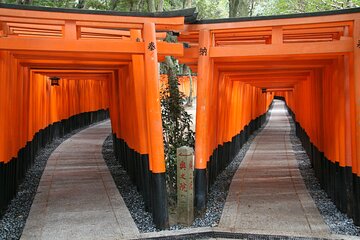
1. Stroll beneath the torii at the Fushimi Inari Shrine

One of Kyoto’s most beautiful shrines, Fushimi Inari, is adorned with foxes and vermilion-red gates.
There are two images you probably think of that sum up the country’s culture (and tourism): the red torii gates seemingly floating in the water off Miyajima Island, near Hiroshima, and the rows of similar red torii forming a canopy and snaking uphill toward the Fushimi Inari Shrine in southern Kyoto.
Here, you can stroll beneath the thousands of torii that stretch through wooded forests on Mt. Inari up to the shrine buildings. (The sacred mountain is part of the shrine grounds and a popular place to hike.) Go with a guide who'll lead the way and tell you more about this ancient site’s history—given that the Fushimi Inari Shrine dates from the late 8th century, there’s a lot to learn.
2. Appreciate wabi-sabi at the Kinkaku-ji and Ginkaku-ji Temples

Contemplate traditional Japanese aesthetics at the golden and silver pavilions of Kinkaku-ji and Ginkaku-ji Temples.
Many first-time visitors to Kyoto have UNESCO World Heritage–listed Kinkaku-ji, the Golden Pavilion, high on their itineraries: what’s not to love about a 14th-century gold-leaf-covered Zen temple picturesquely situated beside a pond reflecting the golden gleam? Honestly, not much.
However, fewer tourists make it to Ginkaku-ji, the silver temple. That might be because it’s not actually silver—Ginkaku-ji was inspired by Kinkaku-ji, but was never covered in silver leaf—so it isn’t quite as dramatic as its counterpart. Nevertheless, it's a beautiful place, and is said to embody the Zen concept of wabi-sabi, or beauty in imperfection. To visit them both, book a customizable private tour of Kyoto.
Did you know?: In Japanese, “kin” means gold and “gin” silver, hence the name of the central Tokyo neighborhood Ginza, where silver money was once minted.
3. Get lost in Gion

Watch a traditional show and dine at a Japanese izakaya in Gion, one of Kyoto’s top neighborhoods.
Gion is one of Kyoto’s most famous and atmospheric neighborhoods: it’s the old geisha and entertainment district, and retains a traditional atmosphere. This is the place you’re most likely to see geisha and trainee maiko in colorful kimonos and wooden geta shoes.
Having said that, many travelers head here in the evening for traditional entertainment at Gion Corner, an arts performance venue. Some Gion night tours combine sightseeing with food, drink, and geisha culture, which is quite difficult to encounter without an insider guide. There’s plenty to see in Gion in the daytime as well, including the Yasaka Shrine, which hosts the fabulous Gion Matsuri summer festival.
4. Enjoy the views from Kiyomizu-dera Temple

Step out onto Kiyomizu-dera’s wooden terrace for sweeping views.
Another of Kyoto’s 17 UNESCO World Heritage Sites, Kiyomizu-dera Temple’s history dates back to the 8th century, although most of the buildings here are newer. The main hall is cantilevered over the hillside, offering impressive views of the grounds and the city beyond, making this one of the best places to visit in Kyoto for panoramic vistas. (The temple’s name actually means “pure water temple,” as it was built on the Otowa Waterfall, which still flows beneath the main hall.)
Kiyomizu-dera is especially lovely in spring and fall, when the blossoming trees and changing colors on the surrounding hillside add drama, and guided walking tours are a convenient way of reaching Kiyomizu-dera on foot without getting lost.
5. Admire the lavish details of Nijo-jo Castle

Tour Nijo-jo Castle, one of Kyoto’s former imperial residences.
Not to be confused with the Kyoto Imperial Palace, Nijo-jo Castle was built for ruling shogun Tokugawa Ieyasu in the early 17th century; during the early Meiji period (mid to late 19th century), it was used as the imperial residence, before the capital was moved to Tokyo.
While its location on mostly flat ground means it doesn’t immediately look like a “typical” Japanese castle—think of Himeji, Matsumoto, or Kumamoto castles—it's nevertheless considered among the best surviving examples of a feudal-era Japanese castle. Within the grounds, you can tour the gardens and explore the Honmaru and Ninomaru Palaces, where countless treasures are displayed.
Insider tip: As it's located in central Kyoto and within walking distance of other attractions, it’s a fixture of many Kyoto walking tours.
6. Eat your way around Nishiki Market

Refuel at Nishiki Market, Kyoto’s foodie hub.
Before, after, and during your sightseeing in Kyoto, stop by Nishiki Market, a 5-block-long covered shopping street with market stalls and enclosed shops. Many of the market’s businesses are family-run and have been operating for decades or longer. It's the ideal place to buy ready-to-eat food for a late breakfast (the market opens around 10am), lunch, or early dinner (it closes around 6pm), as well as ingredients and Japanese kitchen items.
Here, food-focused tours are a good way to find your bearings—a guide will point out what to try, help you navigate the vast array of goods available, and help you gain a greater understanding of Kyoto’s contemporary food culture.
Insider tip: If you want to eat at Nishiki Market, make sure you find a seat. This is an important Kyoto sightseeing tip, as it’s considered rude to eat while walking in Japan.
7. Hike in Arashiyama Park

Explore beyond the famous bamboo grove in the Arashiyama district.
Many travelers just make a quick stop at the picturesque (and usually very crowded) Arashiyama Bamboo Grove—a must-see spot in Kyoto—but beyond this relatively small cluster of bamboo lies the sprawling Arashiyama Park. It’s located in the Sagano area of Kyoto, which, despite being a popular tourist destination, is where the city starts to give way to nature: forests, mountains, and narrow river gorges.
Here, you can stroll across the Togetsu-kyo Bridge over the Katsura River, admire (or dodge) the monkeys at Kameyama Park, and drop into the temples and shrines you come across, some of which aren’t given much attention in typical guidebooks because there are so many of them.
Insider tip: Join a hiking tour to explore without the risk of getting lost.
8. Experience Pure Land architecture at Byodo-in Temple

Visit the 10th-century Byodo-in Temple in a town south of Kyoto.
South of Kyoto in Uji, the UNESCO World Heritage–listed Byodo-in Temple is close enough to the city that you don’t have to make a full-day trip, but far enough away that it feels like an excursion. The 10th-century temple is also considered to be an excellent example of Buddhist Pure Land architecture, which is a little different from other Kyoto religious buildings—so, if you have an interest in Japanese architecture or religion should add this to your Kyoto travel itinerary.
Parts of the complex are the original 11th-century structures, and the treasure house contains many significant artifacts. Some guided tours to Byodo-in include other sites in Uji, and this full-day tour, for example, departs Kyoto early, giving you plenty of time to explore.
Did you know?: There’s a smaller-scale replica of Japan’s Byodo-in Temple in the Koʻolau Range within Valley of the Temples Memorial Park in Hawaii. Built in 1963, it’s a major attraction on Oahu.
9. Entertain the kids at Toei Kyoto Studio Park

Immerse yourself in Edo-period Japan at Toei Kyoto Studio Park’s working film set and replica town.
Most travelers won’t have a hard time finding things to do in Kyoto with kids: cycling tours, martial arts classes, craft classes, and cooking lessons are just a few family-friendly activities on offer. But if younger team members’ enthusiasm for wandering around temple grounds is waning, add the Toei Kyoto Studio Park to your Kyoto travel itinerary.
It’s a replica Edo-period (1603–1868) town and film set where you can watch live-action samurai and ninja shows, dress in period costume, tackle mazes and labyrinths, and sometimes watch period dramas being filmed. Guided tours provide transportation to and from the park and stop at other Kyoto attractions.
10. Day trip to the coast at Amanohashidate

Take a break and enjoy one of Japan’s most scenic views, the sandbar of Amanohashidate.
For a day trip from Kyoto, many people head to Nara, another former Japanese capital that’s now home to more deer than royalty. But for a slightly different experience with fewer other international tourists (there will still be plenty of Japanese visitors around), head to Amanohashidate.
Located in the far north of Kyoto Prefecture on the Sea of Japan coast, Amanohashidate—a long, skinny sandbar that looks especially impressive from the mountains at either end—is about a 2-hour drive from Kyoto, and guided day tours make it easy to visit.
Did you know?: Centuries ago, Amanohashidate was named a “Nihon Sankei,” one of Japan’s three most scenic views: the other two are Miyajima near Hiroshima and Matsushima Bay near Sendai in Miyagi Prefecture.
Book more things to do in Kyoto




Keep planning your Kyoto trip


