
9 of the Top Temples and Shrines in Kyoto


Kyoto is home to more than 2,000 temples and shrines—roughly one for every 700 residents. Nationally, the number of Buddhist temples and Shinto shrines in Japan is nearly evenly split, but Kyoto is a temple town, with top temples in Kyoto outnumbering shrines about four to one.
Not sure about the difference? Shrines have torii, simple symbolic gates with two posts and upper lintel(s), while temples have more solid gates, the outer of which often contain fierce Nio guardians, warrior-looking gods that protect the premises.
Visit some of the best temples and shrines in Kyoto for a sense of Japan’s history and cultural heritage. Not sure where to begin? Our Kyoto temple guide helps you to plan your exploration, and comes complete with Kyoto temple travel tips.
1. Kinkaku-ji (Golden Pavilion)

The Golden Pavilion is both glam and grim.
Kinkaku-ji (Golden Pavilion), also known as Rokuon-ji, is one of the must-visit temples in Kyoto. The 3-story building is indeed covered in gold leaf, and its gleaming surface reflects on the adjacent pond and glows across the extensive gardens. But with a history that stretches back to the 1300s, there are dark chapters, including an arson and attempted suicide that was fictionalized in Yukio Mishima’s novel of the same name, Kinkaku-ji.
Insider tip: Visit at off-peak hours—book a weekday morning tour for a less crowded experience, or combine it with a Kyoto temples and shrines tour to see more highlights.
2. Fushimi Inari Shrine (Fushimi Inari Taisha)

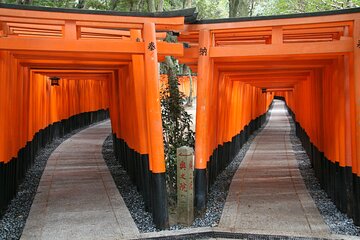
Foxes and sacred gates abound at Fushimi Inari.
Fushimi Inari Taisha, dedicated to the Shinto fox god Inari, is known for its hundreds of vermilion torii symbolizing the border between the human and the spiritual world. Today, there are five sub shrines in the main shrine complex, though the gates still ascend to the top.
This famous shrine in Kyoto can get crowded, yet few people actually complete the climb, opting to hop off the bus for a 10-minute snap-and-run. Keep going up though, and you’ll earn some quiet to appreciate your surroundings. Visit on an early morning tour or a night walking tour to beat the largest crowds.
3. Ryoan-ji Temple and Garden

An early morning visit offers the opportunity for mindfulness.
Ryoan-ji Temple is a Zen Buddhist temple known for its karesansui, or dry garden, which is listed as a UNESCO World Heritage Site. The rock garden, with its raked white sand and ancient stones, is an exercise in minimalism, reducing distractions so that you can focus on quiet contemplation and your inner world. Established in 1450 AD, it’s not known exactly who created it. The temple grounds hold other gardens as well; the pond in autumn is especially lovely.
4. Sanjusangen-do Temple

See 1,001 faces of mercy at this striking Kyoto temple.
Inside the long hall of the ancient Sanjusangen-do Temple are 1,001 of the most well-known Kyoto temple attractions: hand-carved, life-size wooden statues of Kannon, goddess of mercy. Each one is distinct, and collectively they’re designated as National Treasures. More than 100 statues date from when the temple was originally established in the mid-1100s; the rest were re-carved after the hall was destroyed by fire in the 1200s.
Insider tip: Photography is not allowed inside the main hall except by special advance permission, mostly reserved for media.
5. Yasaka Shrine (Gion Shrine)

In Gion, color and light characterize this beloved shrine.
Located in the middle of the Gion entertainment district, the Yasaka Shrine (or Yasaka Shinja) is part of the city’s heart. The shrine is so old that its exact establishment date is unknown, but some sources put it at 656 CE. However, the bright shrine-red paint and many lanterns match well with the neighborhood, which is stuffed with restaurants, geisha houses, and local bars. (You can even combine a visit to the shrine with a geisha district walking tour.)
Insider tip: Yasaka Shrine is the host of month-long Gion Matsuri in July, a festival that has been held for 1,150 years.
5. Toji (Eastern Temple)

Explore a literal treasure trove at this historic Kyoto temple.
Toji’s 5-story tower, one of Japan’s tallest pagodas, is the cornerstone of the extensive temple grounds. Here since 794 AD and the establishment of Kyoto (then known as Heiankyo) as the capital, the UNESCO World Heritage Site houses a treasure hall holding more than 20,000 National Treasures and Important Cultural Properties. See it while exploring Kyoto temples with a private guide.
Insider tip: For a special Kyoto temple attraction, look for the antique fair held on the grounds the first Sunday of each month and the flea market held on the 21st of each month.
8. Tenryu-ji Temple

At this temple in Kyoto, you can tour the gardens and enjoy gourmet food.
Surrounded by nature in the Arashiyama area on the west side of Kyoto, Tenryu-ji Temple lies on the banks of the Katsura River and at the foot of Hozukyo Gorge. Stroll the lovely gardens on a sightseeing tour combined with the Arashiyama bamboo grove.
A Rinzai Zen temple established in 1339 AD, Tenryu-ji is unusually welcoming to visitors: There’s free public zazen (sitting meditation) with no appointment necessary, as well as shakyo, sutra-copying, by appointment and for a fee. You can also try Michelin-noted shojin ryori, ascetic vegetarian cuisine, for lunch. (Reservations are recommended.)
8. Shimogamo-jinja Shrine

Explore Kyoto’s origin story at this handsome shrine.
People have worshiped at Shimogamo-jinja Shrine (said to be the oldest shrine in Kyoto) for at least 2,000 years. It’s tucked between the fork of two rivers, the Kamogawa River (Kamo River) and the Takano River, and surrounded by a lush forested area in the midst of urban development. The mythical creator and guardian of Kyoto, Kemotaksonomi-no-mikoto, is enshrined here.
Together with Kamigamo Shrine, they host the Aoi Matsuri in May—a festival where people dressed in Heian period costumes as courtiers, archers, and samurai, march and ride on horseback through the forest in a splendid procession.
9. Koryu-ji Temple

Finally, step into history at Kyoto’s oldest temple.
Originally established in 603 AD, the Shingon Buddhist Koryu-ji is a handsome temple featuring intricate wooden architecture and pretty grounds with ancient trees and a pond. It’s comparatively off the beaten track, but art and idol lovers will appreciate the treasure museum, which includes a carving of the Future Buddha sitting in a half lotus position, a National Treasure. Next to the temple is Toei Kyoto Studio Park (Toei Uzumasa Eigamura), a theme park where you can see period drama film sets and dress up accordingly.
Book more things to do in Kyoto




Keep planning your Kyoto trip


