
Know Before You Go: Visiting the Floating Villages in Siem Reap


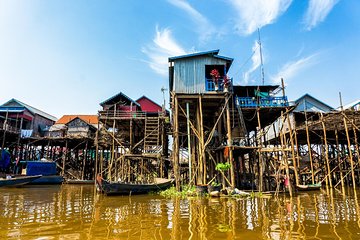
If you’re looking for Cambodian cultural tours in Siem Reap, explore the floating villages of Tonlé Sap, the largest body of fresh water in Southeast Asia. Here, local communities have adapted to live directly on the water, constructing homes and businesses on top of stilts and using boats to get around during the rainy season.
However, with four different villages to choose from, you’ll want to plan your excursion armed with knowledge of the top floating villages near Siem Reap, plus know when to visit, what to expect, and more. Here are the best ways to witness the unique way of life that positions these villages among the most interesting Siem Reap local attractions.
When’s the best time to visit the floating villages?

Visit during wet season for the most authentic floating village experience.
The best time for a Cambodia floating village experience depends on what you’re looking for. During the wet season (between June and October), the villages truly float as water levels in the Tonlé Sap rise, so you’ll visit floating businesses, homes, and flooded forests by boat.
The dry season (from November to May) limits access to some floating villages, but also gives an interesting glimpse of daily life when water levels recede. Consider a sunset tour, when you’ll see the rosy red sky reflected in the waters of the Tonlé Sap.
What are the best floating villages to visit?

Kampong Khleang offers arguably the most intimate glimpse at life in a floating village.
The best floating villages in Cambodia are located on the Tonlé Sap, and there are four that are accessible from Siem Reap: Chong Kneas, Kampong Phluk, Kampong Khleang, and Mechrey. Chong Kneas is the closest to Siem Reap but also the most touristy, while Kampong Phluk offers a more intimate experience.
Kampong Khleang sees very few tourists and is a larger village humming with life, where you’ll see examples of amazing ingenuity, making it one of the most unique villages near Siem Reap. As the hardest to get to, Mechrey is the least popular, though still worth a visit.
How can I get to the floating villages?

The floating villages are located 30–60 minutes away from Siem Reap.
If you’re coming from Phnom Penh, you’ll need to make your way to Siem Reap by bus or plane first. The closest floating village to Siem Reap is Chong Kneas, about a 30-minute drive from the center of the city. Most of the others, such as Kampong Khleang or Mechrey, are located about an hour away. You’ll want to book a tour to visit the floating villages, as tours include transportation and it would be difficult to make your way there on your own.
Should I book a tour to visit the floating villages in Siem Reap?

Yes, touring with a local guide is the best way to experience the area.
Siem Reap is one of the most visited areas in Cambodia, so it’s a good idea to rely on a guide to help you decide where to go and what to see when planning a trip to the Siem Reap water villages. From half-day tours that take you across the lake to a small-group sunset cruise, there are plenty of different time frames and group sizes for you to choose from, making it easy to find the best floating villages Cambodia has to offer.


What can I expect from a tour of the floating villages?

You'll observe daily life, navigate through a flooded forest, and eat in a floating restaurant.
Visiting floating villages in Cambodia is all about observing a unique way of life defined by the challenges posed by the natural environment. When you visit on a Siem Reap floating village tour, you’ll take a bus from the city to the shores of Tonlé Sap. From there, you’ll board a boat that takes you into the middle of the lake where the floating villages are to meet locals, learn about their daily lives, explore a flooded forest, and eat in a floating restaurant.
What should I wear to the floating villages?

Wear light, loose-fitting clothing and bring a cover-up for pagodas.
There's no specific dress code when it comes to visiting the Siem Reap water villages, but you’ll want to dress for the weather, which is usually hot and humid. Wear loose-fitting clothing made of light materials and make sure to bring a hat and other sun protection.
During the wet season (from June to October), pack a rain jacket or poncho. Many floating village tours stop by pagodas too, where you’re required to dress conservatively and cover your shoulders and knees just as you would at Angkor Wat, so bring a wrap or sarong.
Are the floating villages wheelchair accessible?

Floating village tours are generally not wheelchair accessible.
Because most tours of the floating villages involve rides on small boats and exploring buildings on top of stilts, they are generally not wheelchair accessible, though they may be accessible to travelers with other kinds of disabilities. If you or anyone you’re traveling with uses a wheelchair, consider an accessible Siem Reap city tour instead, or tour the temples of Angkor Wat with a private driver. There are lots of other cultural tours of Siem Reap to experience!
Frequently asked questions

Everything you need to know about Cambodia’s floating villages.
Why are there floating villages in Cambodia? Because of the changes in water level between the dry season and wet season, communities who rely on the Tonlé Sap lake for their livelihood have built their homes and businesses on stilts so they sit above the water when the area floods each year. Many of the people who live in the floating village are ethnic Vietnamese people who arrived during the French protectorate era to work.
Are the boats to the floating villages safe? In general, the boats in the floating villages are safe. Make sure to book with a reputable tour company to visit the floating villages though, as they will be sure to maintain the safety standards in their boats.
Are tours of the floating villages weather dependent? Some tours of the floating villages are weather dependent, as the water levels can change dramatically. There may be cancellations during particularly bad storms in the rainy season from June to October, but the tour company will communicate any changes to you directly.
Are there any scams to avoid in the floating villages? The floating village of Chong Kneas specifically is known for some tourist traps and scams. This includes taking visitors to floating schools and asking them to purchase school supplies, which never actually make it to the children. To avoid this, read the reviews of tours and choose one that doesn't visit schools, or consider floating villages other than Chong Kneas.
Book more things to do in Siem Reap





Keep planning your Siem Reap trip


