
Know Before You Go: Visiting Angkor Wat


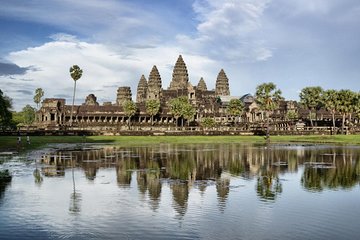
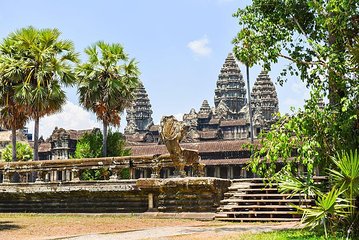
A bucket-list destination in the Kingdom of Wonder, Angkor Wat was once the ancient capital of the Khmer Empire—which ruled the region between the 9th and 15th centuries—and the most developed pre-industrial city in the world. Now a sprawling UNESCO World Heritage Site in the jungle outside Siem Reap, Angkor Wat is famed for its stone temples, interwoven tree roots, and intricate carvings and bas reliefs, and is a must-see spot on any visit to Cambodia.
A little planning can go a long way when visiting Angkor Wat. Here’s everything you need to know to have a great experience at the temples.
How can I get to Siem Reap?

Flying into Siem Reap International Airport is your best bet.
Before you go to Angkor Wat, you need to first get to Siem Reap, the closest city. Although there are lots of ways to get to the city, if it’s your first port of call in the Kingdom of Wonder, flying into Siem Reap International Airport is usually your best bet. However, there are other arrival options.
Overland border crossings: You can cross over the border from Thailand at Poipet, but while it has improved slightly in recent years—it used to be one of the most notoriously terrible border crossings in Southeast Asia—it can still be besieged with queues, unexplained costs, unreliable buses, and expensive taxis.
Planes and taxis: If you’re arriving from Phnom Penh or elsewhere in Cambodia, you may also have a bit of a journey ahead of you. The quickest way is to fly, with regularly scheduled flights between Phnom Penh and Siem Reap. Taxi is the next best option, especially if you want to keep things a little more flexible or have lots of luggage.
Buses: Alternatively, you can also take a day or night bus. If you’re on a budget, night buses can be a good way of saving on accommodation, but you may want to allow yourself a recovery day before heading straight out to tour the temples.
Do I need a visa to visit Angkor Wat?

In short, yes: Visiting Angkor Wat requires pre-planning and tourist visas.
Angkor Wat is located in Cambodia, and most travelers going to Cambodia need a visa. A 30-day tourist visa can usually be organized on arrival (check your requirements before you travel) or online. If you’re planning on applying when you arrive, make sure you have the right amount for the visa in cash—ideally in US dollars as it can cost more in different currencies—a blank page in your passport, and two passport photographs.
When is the best season to visit Angkor Wat?

Most tourists visit Angkor Wat from November to March.
Cambodia has two distinct seasons: the dry season (November to April) and the rainy season (May to October). The busiest times to visit Angkor Wat is November to March—especially December and January—but there can also be a little peak in July and August that coincides with summer holidays in the northern hemisphere.
March and April are the hottest and driest months of the year and are best skipped unless you fancy hot, humid, dusty days exploring the temples. On the other hand, Angkor Wat in the rainy season can be pretty wet and muddy. While it doesn’t usually rain all day every day, you’ll want to bring an umbrella, insect repellent, quick-dry clothes, and sturdy, non-slip shoes.
What's the best time of day to visit Angkor Wat?

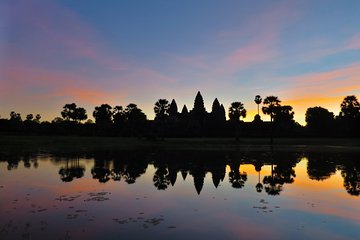
Sunset or sunrise are perennial favorites when it comes to visiting Angkor Wat.
Angkor Wat is open seven days a week, 365 days a year, including national holidays. The majority of the temples are open between 7:30am and 5:30pm, although Angkor Wat, Srah Srang, Pre Rup, and Phnom Bakheng are open for sunrise (from 5am) and Pre Rup and Phnom Bakheng are open for sunset (until 7pm).
While travelers who only have one day usually try to squeeze in as much temple-hopping as possible, if you have a few days you may want to head out for sunrise and early morning temple viewing before returning to the hotel for breakfast and a break during the heat of the day.
Insider tip: Arrive early at the sunrise and sunset temples in order to get a good spot, as space can be limited.
Why should I visit Angkor Wat?

Angkor Wat has over 1,000 temples scattered across 150 square miles (400 square kilometers).
Angkor Wat is most famous for its temples. Most transport-only tours follow set itineraries like the Short Circuit tour or the Grand Circuit tour. While these are a great way to see the main highlights and the most popular temples, it can be a bit crowded with everyone following a similar route. Pre-booking a well-reviewed guided or transport-only tour is a great way to ensure you can go a bit off-track. You can also shortlist some of the temples you don't want to miss and ask your driver if they can put together a custom itinerary.
The main temples: The main highlights of Angkor include Angkor Wat, Ta Prohm, Bayon, and Angkor Thom, which are all fairly close to Siem Reap. Other highlights include Preah Khan, Pre Rup/Phnom Bakheng (the sunset temples), Banteay Kdei, Ta Keo, Ta Som, and Srah Srang—which is actually the royal bathing pool but still deserves an honorary mention.
Further-away temples: Some of the temples, like Banteay Srei, Beng Mealea, Kbal Spean, and the Roluos Group are a little further from Siem Reap. Generally between 30- to 90-minute drive away from each other, these temples are too far for a tuk-tuk—unless you fancy a very long and very bumpy journey—and are best visited on a separate day trip from the main temples. Again, travelers can visit them as part of a tour or hire a driver/taxi for the day.
Guides: If you decide you want to hire a guide when you get to Angkor Wat—and you should—you can usually find licensed guides at the temples (unless it's an especially busy day/ time of year). Official guides wear beige shirts and badges and have passed rigorous tests and training. Unfortunately, there are plenty of unlicensed guides there too, so always check their credentials first.
Is it safe to visit Angkor Wat?

Generally speaking, yes, but scams are quite common in and around the temples.
Unfortunately, there are many scams at the temples, including fake police officers who may provide information and then ask for “tips” (read: bribes); fake monks who may hand you incense or bracelets or ask for “donations;” and anyone who tells you to pay extra fees to enter any temple. In Siem Reap, you should also be wary of pickpockets who ask to see “money from your country” and then try to steal your phone or wallet while you are distracted.
Additionally, don’t support children selling souvenirs, books, or postcards. While it can be tempting—especially when they come up to you and ask to practice their language skills—they’re part of a bigger problem where kids are kept out of school to lure unsuspecting travelers into parting with their cash, which then goes into someone else's pocket.
What is the best way to experience Angkor Wat?

Reputable and vetted tours ensure safe sightseeing practices.
Angkor Wat and the main temples of Angkor are located about 20 minutes from Siem Reap and can be visited by tuk-tuk, car, bicycle, e-bike, or tour bus. You can also visit the temples on the back of a motorbike with a driver. (Note: It’s illegal for tourists to rent or ride motorbikes in Siem Reap, the Angkor Archaeological Park, or anywhere else in Cambodia without a valid Cambodian driving license).
Most visitors either join a tour or hire a driver for a day or several. Tours can be private or with a group and usually include a professional guide who will accompany you to the temples. Be sure to use an official driver (colored vests), using an unofficial driver can be a safety risk. If you're visiting during a busy period or have limited time, it's always worth booking your tour or transport in advance to avoid disappointment.
If you have multiple days to explore Angkor Wat, you may want to do a guided tour one day, a transport-only tour the next, and then either spend a day visiting a harder-to-reach temple or go exploring by bicycle or e-bike.
Can you buy tickets to Angkor Wat online?

Yes, and you can also buy passes directly at the ticket office or through an agent.
An Angkor Pass is required to visit Angkor Wat and the Angkor Archaeological Park. You can opt for 1-, 3-, or 7-day passes, which can be bought directly at the ticket office at the gates, online through the Angkor Enterprise Portal, or through an agent. Children under 12 enter for free (but must show their passports), as do Cambodian nationals.
The fine print: Multi-day tickets do not have to be used on consecutive days (you have 10 days to use the 3-day pass and 30 days to use the 7-day pass). Tickets are not transferable and cannot be upgraded or changed after purchase. There are regular ticket checkpoints throughout the complex and hefty fines apply if you lose your ticket or enter the complex without a pass.
Tours and tickets: It’s also worth noting that most tours do not include tickets, which means if you’re planning on heading there for sunrise you’ll have to arrive extra early (a rather risky option when the office doesn’t open until 5am), apply online or through an agent—who will drop your pass at your hotel the night before—or take a trip out to the ticket office to get your ticket sorted the day before. The ticket office closes at 5.30pm every day.
Insider tip: Bring cash—small bills especially. You’ll want to pick up water, tip your guide, and buy snacks while you’re at the temples, but you won’t be able to use a bank card or break large bills.




What should I wear to visit Angkor Wat?

It depends on the weather, but you'll need to dress modestly and cover your shoulders and knees.
Generally speaking, you’ll need to cover your shoulders and knees, and avoid skimpy or religious-themed clothing—Angkor Wat is a religious site and you’ll be denied entry if you’re not dressed appropriately. It’s also worth noting that you’ll need comfortable shoes. Visiting the temples usually involves a lot of walking, a lot of stairs, and some climbing and scrambling, which means flip-flops are not the best choice of attire.
You should also bring water, sunscreen, a sun hat, insect repellent, and an umbrella (if it’s raining). You don’t want to have to cut short a day at the temples because of dehydration or sunburn.
Frequently asked questions

Everything you need to know about Angkor Wat.
What country is Angkor Wat in? Angkor Wat is a Buddhist temple complex located in northern Cambodia, near the small and modest city of Siem Reap.
How old is Angkor Wat? Angkor Wat was built in the first half of the 12th century, around the year 1110–1150, making it around 900 years old.
Who built Angkor Wat? Angkor Wat was built in the 12th century by King Suryavarman II as the state temple of Khmer capital, and it was dedicated to the Hindu god Vishnu.
Is Angkor Wat the biggest temple in the world? Yes, Angkor Wat is the largest religious monument in the world—covering an area four times the size of Vatican City.
Book more things to do in Angkor Wat


Keep planning your Angkor Wat trip


