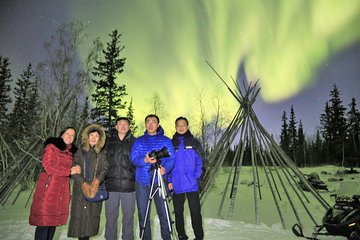
Aurora Borealis in the skies of Yellowknife, Northwest Territories, Canada

Things to do in  Yellowknife

A land of long stories

Located on the traditional territory of the Yellowknives Dene First Nation, the capital city of Canada's Northwest Territories overlooks the deep waters of Great Slave Lake. Yellowknife is a small, close-knit community that invites visitors to spend seemingly endless summer days exploring the region's natural beauty and bright winter nights chasing the northern lights. Things to do in Yellowknife include kayaking on the lake, snowshoeing through untouched snow, and taking in the music scene at one of the city’s many festivals.

Top 1 attractions in Yellowknife

All about Yellowknife

Local Currency
Canadian Dollar (CA$)
When to visit

The best time to visit Yellowknife depends on your interests. For hiking, canoeing, or kayaking, visit from May to July, when the temperatures rise and the sun sets for only a few hours a night. For those chasing the Northern Lights, visit between the middle of November and the start of April, when nights are long and clear. Throughout the month of March, the Snowking's Winter Festival livens up the city with music, dancing, and a massive ice castle.

Getting around

Central Yellowknife is compact enough to walk, but because many of the region’s attractions are fairly spread out, you’ll want to book a guided tour or get a rental car to explore the area. Should you choose to drive in the winter, be careful of snow and ice, especially if you're not used to driving in such conditions. Be slow and cautious, try to minimize your time on the road, and always check weather warnings before setting off on a longer trip.

Traveler tips

Beautifully tended and right next to downtown, Somba K'e Park overlooks Frame Lake and its small islands, and you’ll always find plenty of locals enjoying the green space. In the winter, it’s a great spot to cozy up with a thermos of cocoa and hope for the Northern Lights, and in the summertime, it hosts music festivals and farmers markets.

en
7c2d7519-ee46-4ff0-bc0b-639bc2202a5a
attraction_list
People Also Ask
Q:Is it worth visiting Yellowknife?
A:

Yes, the city serves as a gateway to the rest of the Northwest Territories, and it’s a very different environment than the rest of Canada. Full of culture and history, Yellowknife is a great place to learn about the Indigenous nations, Metis people, and Inuit who call the land home.

Q:How long should I spend in Yellowknife?
A:

If you’re passing through Yellowknife on your way elsewhere, one or two days is enough time to get a feel for the city. For those using it as a home base for travel in the region, four to seven days in the city gives you time to check out some of the Northern Territories' more distant parks and nature reserves.

Q:What is Yellowknife best known for?
A:

Yellowknife is best known for its proximity to the wild beauty of the Northern Territories. The region is full of parks and trails for nature lovers, including the Yellowknife River Territorial Park Day Use Area. It’s also known for the Northern Lights, which are often visible from the city.

Q:Is Yellowknife expensive?
A:

Yes, Yellowknife is definitely more expensive than Canadian cities to the south due to the cost of transporting food and necessities. If you’re traveling on a budget, you might want to consider packing some lightweight, nonperishable snacks to save money at restaurants.

Q:Is Yellowknife the coldest city in Canada?
A:

Yes, but it’s a bit of a technicality. Yellowknife is the coldest city in Canada with over 10,000 residents, but Eureka is actually colder—it just doesn’t count as a city. Yellowknife has an average winter temperature of -10.12°F (-23.4°C) and a record low temperature of -60.2°F (-51.2°C) in 1947.

Q:What should I wear in Yellowknife?
A:

In the winter, base layers made of wool or technical silk will keep you warm without feeling bulky, and heating packs in snow boots are a great trick. In the summertime, long sleeves and pants protect you from mosquitos and horseflies, but you'll want to wear lightweight, breathable fabrics to stay cool.