Things to do in Oslo

Things to do in  Oslo

Fun on the fjord

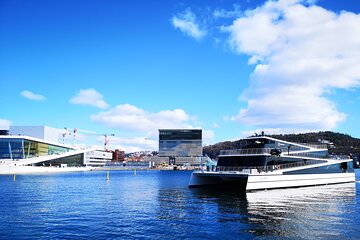
Norway's cultured capital shines between the Oslofjord and the surrounding forested hills. Oslo is a stylish, laid-back city that offers easy access to nature and cultural gems like the art-packed Munch Museum and the striking Oslo Opera House. From exploring Viking-era artifacts at the Viking Ship Museum and checking out contemporary sculptures at Ekebergparken to island-hopping around the fjord and getting steamy in an open-air sauna, there are plenty of things to do in Oslo.

Top 15 attractions in Oslo

Top activities in Oslo

All about Oslo

Local Currency
Norwegian Krone (NOK)
When to visit

A mild climate makes Oslo an attractive destination all year round, though most travelers are deterred by the long nights of winter. To experience the city at its best, visit between May and September. This is when locals fill the restaurants’ outdoor patios, swim and island hop on the Oslofjord, and enjoy long days with a jam-packed cultural calendar.

Getting around

Oslo has an excellent public transportation system, Ruter, that makes getting around the city a breeze. A single ticketing system covers all public transit, including city and regional buses, trams, subways, local trains, and ferries. However, many attractions in the city are within walking distance of each other, so you can also explore much of Oslo on foot or (like a local) by bicycle.

Traveler tips

If you’re planning to take in a big dose of the city’s rich cultural scene, consider buying an Oslo Pass. The timed pass (valid for 24, 48, or 72 hours) covers travel on all public transit, admission to more than 30 attractions (including the National Museum, Munch Museum, and the Nobel Peace Center), and discounts at select restaurants.

en
78fc387c-c291-4a1c-bcf3-13540997b713
attraction_list
People Also Ask
Q:What is Oslo best known for?
A:

Oslo is known for its fjord setting and a waterfront lined with cultural attractions from the Munch Museum to the striking Oslo Opera House. The city’s maritime history encompasses Vikings and polar explorers, which you can learn about at the Viking Ship Museum and the Fram Museum.

Q:How many days do you need in Oslo?
A:

Two or three days in Oslo should be enough time to see most of the city’s attractions, including the Oslo Opera House, National Museum, Royal Palace, and Fram Museum, and to get onto the fjord by boat. With more than three days, you can add on a day trip to Lillehammer.

Q:Can you see Northern Lights in Oslo?
A:

Yes. Technically you can see the northern lights in Oslo, but it is unlikely. The city is too far south for reliable aurora-viewing and there is too much light pollution to see them when they do appear. Northern Norway, especially Tromsø, is a better place to see the northern lights.

Q:Is Oslo or Bergen better?
A:

Oslo and Bergen are wonderful cities. Both are filled with history and have thriving cultural scenes, and both have access to water. Bergen, which is surrounded by mountains, has the slight upper hand when it comes to nature. Oslo is a better bet if you want a cosmopolitan city feel.

Q:What can't I miss in Oslo?
A:

Don’t miss visiting the Munch Museum and National Museum. Art lovers should also explore the sprawling sculpture parks at Vigeland and Ekeberg—the view from the latter is noteworthy. Get out onto the water, whether island-hopping by boat or jumping into the chilly fjord from one of its several floating saunas.

Q:Is Oslo worth visiting?
A:

Yes. While Oslo is often overlooked in favor of Copenhagen and Stockholm, it is a gem of a city that is filled with culture, history, and stylish and creative people. One of its greatest assets is its ease of access to nature: a perfect complement to the modern cityscape.