
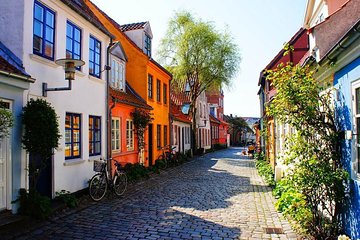
Charming houses in the Møllestien Street in Aarhus, Denmark.

Things to do in  Aarhus

Don’t worry, be happy

Denmark’s second-largest city, Aarhus is a buzzy cultural and culinary hub that holds its own against the heft of the country’s capital, Copenhagen. Set on the Jutland peninsula’s eastern coastline, this historic town has endless things to do thanks to its cutting-edge architecture, world-class museums, excellent dining, and a full roster of festivals during the balmy summer months. Plus, the city’s vibrant spirit—fueled by the local university—has placed it at the top of the list of the world’s “happiest places to live,” making it a must-see destination in Denmark.

Top 9 attractions in Aarhus

Top activities in Aarhus

All about Aarhus

Local Currency
Danish Krone (DKK)
When to visit

Aarhus comes to life in the summer, when the lion’s share of its annual festivals and events are held. The main draws include June’s NorthSide Festival, where Danish and international artists perform a variety of genres; the Aarhus Jazz Festival in July; the Blomsterfestival (Flower Festival) at the Tivoli Friheden theme park in July and August; and the Aarhus Festival, which highlights the arts at the end of August into the first week in September.

Getting around

Aarhus is a major transport hub, so it’s easy to reach by air, ground, or sea. Once here, you can visit the compact Old Town on foot or use the robust bus and light rail (Letbanen) networks to access attractions outside the center—be sure to purchase your ticket before boarding via the Midttrafik app. This flat city is also a paradise for cyclists, and the Donkey Republic bikeshare app makes pedaling around a breeze.

Traveler tips

With its population of students and young professionals, Aarhus supports one of the most interesting craft beer scenes in Denmark. Take a break from the country’s ubiquitous Carlsberg brand and sip artisan brews in local pubs such as Hantwerk’s on the city’s waterfront and Mig & Ølsnedkeren in the trendy Latin Quarter. Erlings Jazz- & Ølbar is a great alternative for pairing craft beer with local jazz—live shows are held on Saturdays and some Wednesdays.

en
43a48818-8b10-4ef0-8d5f-8932acefef76
attraction_list
People Also Ask
Q:Is Aarhus, Denmark, worth visiting?
A:

Yes, this small but dynamic city bursts with worthy attractions, a fantastic dining and drinking scene, and a laid-back vibe. Unlike Copenhagen, Aarhus flies under the travel radar, so visitors get a sense of authentic Danish life while still having plenty of attractions and activities to fill the days.

Q:What is Aarhus best known for?
A:

Aarhus is known for being the “happiest city in the world,” according to the London-based Institute for Quality of Life. Many people visit to experience the high quality of this small, Danish city for themselves, enjoying welcoming public spaces, vibrant cultural offerings, top-tier dining, and outdoor attractions.

Q:How many days should I spend in Aarhus?
A:

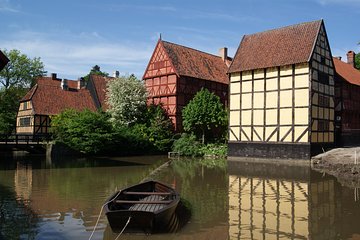
You can easily cover the attractions in compact Aarhus in two or three days. In this span of time, check out highlights such as the Den Gamle By open-air museum, the Old Town and cathedral, the botanical garden, ARoS art museum, and the renovated harbor area anchored by the Dokk1 cultural center.

Q:Is Aarhus walkable?
A:

Yes, most of the top attractions in Aarhus are clustered in the city’s Old Town and are accessible on foot. Many areas of the city, including much of the refurbished harbor area, are also restricted to pedestrians. When your feet get tired, the city’s bikesharing service can help you cover more ground.

Q:Is Aarhus cheap or expensive?
A:

Like most of Denmark, Aarhus is not a particularly budget-friendly destination. Hotel rates and restaurant prices can be hard on the wallet, but there is plenty to do in the city that won’t break the bank. Stroll through the botanical garden, visit the Old Town and cathedral, and take in the waterfront harbor area.

Q:What food is there to try in Aarhus?
A:

Aarhus is a culinary powerhouse, offering everything from chic Michelin-starred restaurants to trendy food markets with a variety of street foods. In addition to Danish staples such as artisan bread, pastries, cheeses, and the ever-present smørrebrød open-faced sandwiches, visiting gourmands can try tacos, falafel, and other international dishes.