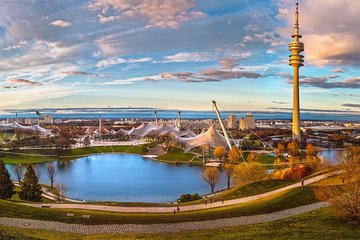
Aerial view of Nuremberg Old Town skyline

Things to do in  Nuremberg

The best of times, the wurst of times

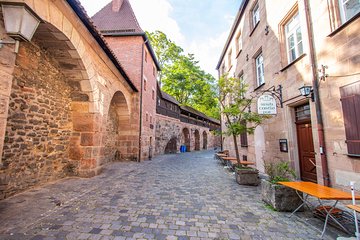
History buffs flock to Bavaria’s second-largest city to learn about the Nuremberg Trials and tour the former Nazi Party Rally Grounds, but there’s so much more to Nuremberg than its poignant past. At its core, there’s an atmospheric Old Town that dazzles during the annual Christmas market—think cobblestone streets, half-timbered houses, twinkling lights, gingerbread, and stalls selling the local specialty sausage Nürnberger Rostbratwurst. Other things to do in Nuremberg’s Old Town include seeing the Imperial Castle, a popular choice for walking tours, and Renaissance artist Albrecht Dürer’s former home.

Top 11 attractions in Nuremberg

Top activities in Nuremberg

All about Nuremberg

Local Currency
Euro (€)
When to visit

The most popular time to come to Nuremberg is late November through mid-December, when the historic Christmas market (Christkindlesmarkt) transforms the city into a winter wonderland. If you’d prefer to avoid cold weather, then May through September are good months to visit. In June, music fans gather for Rock Im Park—one of the biggest rock festivals in Germany. For folk traditions, plays, jousting, and jazz, check out the Old Town Festival (Altstadtfest) in September.

Getting around

The compact city of Nuremberg is ideal to explore on foot, especially as many of its key landmarks are within walking distance of each other in the Old Town. There are also great public transportation options available, including trams, buses, the U-Bahn (subway), and the S-Bahn (suburban trains). Tickets can be bought from vending machines at stations or from bus and tram drivers.

Traveler tips

For a perfect people-watching spot to break up your sightseeing, the Tiergärtnertorplatz—close to the Imperial Castle—is a great place to relax and have a coffee. If you’re wondering where hipsters gather in Nuremberg, then get out of the city center and head for the Gostenhof district, known by locals as GoHo. Here, you can find vintage stores, galleries, street art murals, cute cafés, and quirky independent shops selling handmade goods.

en
964612f5-ddbd-4410-84c3-f35fafcd2d64
attraction_list
People Also Ask
Q:What is Nuremberg best known for?
A:

Nuremberg is best known for being the setting of the Nazi Party Rallies and the Nuremberg Trials. Beyond World War II history, Nuremberg is visited for its beautiful Old Town and well-preserved medieval architecture, as exemplified by the Imperial Castle. It’s also home to one of Germany’s best Christmas markets.

Q:Is there anything to see in Nuremberg?
A:

Yes, there’s lots to see in Nuremberg. Fans of historic buildings can visit the Imperial Castle. Shoppers won’t want to miss the Hauptmarkt and the GoHo neighborhood. Art lovers can visit painter Albrecht Dürer’s former home, and World War II history buffs can tour the former Nazi Party Rally Grounds.

Q:How many days in Nuremberg is enough?
A:

Two days is enough time to leisurely see a short list of Nuremberg’s top landmarks. On day one, check off Old Town highlights on foot, such as St. Lorenz Church, the Frauekirche, and the Imperial Castle. Then, spend a day visiting World War II sites and the German National Museum.

Q:Is Nuremberg a walkable city?
A:

Yes, Nuremberg is a walkable city for visitors, especially as a lot of its top landmarks are located in and around the Old Town (Altstadt), which has cobblestone streets and pedestrianized areas. The main train station also is located about a 15-minute walk from the center of the Old Town.

Q:How do I spend a day in Nuremberg?
A:

With one day, head straight to the Old Town to see the city’s well-preserved medieval buildings. Key sights to visit include the Hauptmarkt, St. Lorenz Church, Weissgerbergasse, the Schöner Brunnen fountain, and the Imperial Castle. Then, finish the day with a visit to the Documentation Center Nazi Party Rally Grounds.

Q:Is Nuremberg a day trip from Munich?
A:

Yes, Nuremberg is a day trip option from Munich. The fastest way to get between cities is by train, and the journey time usually takes just over 1 hour. The trains operate regularly throughout the day, with roughly 50 trains departing Munich’s main station each day to get to Nuremberg.