

Things to do in Luxembourg
More castles than towns
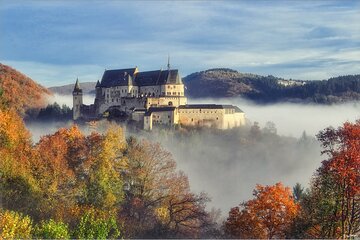
If you need proof that size doesn’t matter, look no further than Luxembourg. Despite being more than 10 times smaller than neighboring Belgium, landlocked Luxembourg still boasts three languages, the world’s highest GDP per capita, and a reputation as a global banking heavyweight. Few visitors venture beyond the eponymous capital with its UNESCO-listed Old City, but there are plenty of other things to do in Luxembourg. Hike through Guttland’s forested valleys, take a Riesling-fueled bike ride around the Moselle Valley wine region, or visit one of the country’s 70 castles.
Top 4 attractions in Luxembourg


Explore Luxembourg by interest


Top activities in Luxembourg






All about Luxembourg
When to visit
The summer months of June through August afford the sunniest weather, and as Luxembourg often misses out on the crowds flocking to neighboring countries, it’s easy to travel in peak season. Early fall is particularly attractive for hikers when the forested valleys around the capital and the northern Ardennes are ablaze with red, gold, and orange foliage. If you can brave the cold—and the probable snowfall—Luxembourg City hosts a Winterlights Festival and Christmas market over the festive season.
Getting around
You can drive the entire length of Luxembourg in less than two hours, making it an easy addition to any Western European road trip. However, with public transport free of charge throughout the country—yes, you read that right!—you might want to join eco-conscious locals and hop on the train, tram, or bus instead. International trains also connect Paris, Brussels, and Trier with Luxembourg City, and on arrival, you can explore the compact center on foot.
Traveler tips
Twisted woodlands, rocky gorges, and hidden caves afford an enchanting backdrop for hiking in the northeastern region of Mullerthal. Known to locals as “Little Switzerland,” its lack of international visitors makes it even more appealing. Make Echternach your base, from where you can hike the dramatic Wolf’s Canyon (Gorges du Loup), marvel at the sandstone-sculpted wonders of the Mëllerdall UNESCO Global Geopark, or tackle Luxembourg’s flagship hike, the 70-mile (112-kilometer) Mullerthal Trail.
en
26ed1885-2cc3-49cb-b186-bf3bf1252736
attraction_list
People Also AskQ:Are there any interesting attractions in Luxembourg? Q:How should I spend a day in Luxembourg? Q:What is Luxembourg best known for? Q:Is Luxembourg worth visiting? Q:Is 2 days enough for Luxembourg? Q:Is Luxembourg very expensive?
More Tours in Luxembourg
Things to do near Luxembourg
- Things to do in Luxembourg City
- Things to do in Trier
- Things to do in Verdun
- Things to do in Liège
- Things to do in Maastricht
- Things to do in Koblenz
- Things to do in Bonn
- Things to do in Nancy
- Things to do in Cologne
- Things to do in Mainz
- Things to do in Düsseldorf
- Things to do in Reims
- Things to do in Brussels
- Things to do in Strasbourg
- Things to do in Frankfurt
Popular on Viator
- Statue of Liberty
- The White House
- Antelope Canyon
- Hoover Dam
- Alcatraz
- Stonehenge
- Auschwitz-Birkenau Memorial and Museum
- Beverly Hills
- Colosseum
- Washington Monument
- San Diego Zoo
- Space Needle
- Eiffel Tower
- Pearl Harbor National Memorial
- Empire State Building
- Art Institute of Chicago
- Aquarium of the Pacific
- Blue Lagoon
- Burj Khalifa
- Metropolitan Museum of Art (The Met)