The Main Market of Trier at night, Germany

Things to do in  Trier

Roman heritage, German roots

In the heart of Germany’s Mosel wine region is the ancient city of Trier, founded by the Romans and run by every passing empire ever since. You can see remnants of the Romans at the Roman gate, baths, and amphitheater—it was one of Rome’s four European capitals, after all. There are lots of things to do in Trier that involve history and architecture, but if you’re a foodie, you’re in luck too. Some of Europe’s best wine is made nearby, food markets line the streets, and there are plenty of historical German pubs to visit.

Top 6 attractions in Trier

Explore Trier by interest

All about Trier

Local Currency
Euro (€)
When to visit

Like many German cities, Trier is beautiful at Christmas. You’ll find flurries of snow, festive markets selling food and treats, and decorations everywhere. If you prefer a warmer climate, visit during August as part of a river cruise or longer trip up the Mosel valley, or wait until September and October for the wine harvest. Then you’ll get to try a local delicacy—federweisser, a fermented grape juice drink that’s not quite wine, but just as delicious.

Getting around

Trier is connected to many of the region’s small towns and cities by Germany’s excellent public rail system. Tickets are great value and the trains themselves are clean, efficient, and comfortable even for longer journeys. You can take river cruise trips further up the valley to Mainz, Piesport, or Koblenz, and the local bus service reaches smaller villages where there are quaint hostels and campsites.

Traveler tips

Trier is a fascinatingly historic city, with a lot to take in. Trier Cathedral is itself an imposing and unique building well worth taking some time to fully explore, while the Roman amphitheater is very well preserved. The Landesmuseum is packed with Roman archaeological finds, and the Main Market has typical German wooden-framed buildings and a regular food and crafts market, plus Christmas markets throughout December.

en
c4afaa45-c684-4c28-904a-c54869bb89ec
attraction_list
People Also Ask
Q:Is it worth visiting Trier?
A:

Trier is well worth a visit, especially if you’re interested in history and architecture. There’s an interesting blend of ancient and modern buildings in Trier, owing to the bombings during WWII, but the Roman ruins are remarkably well-preserved. It’s a vibrant market city and also makes a good jumping-off point for the Mosel.

Q:What is Trier Germany known for?
A:

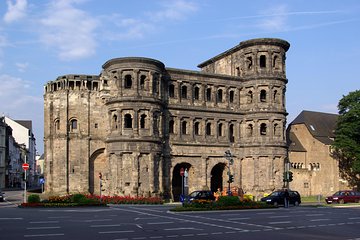
Trier is best known for Porta Negra, its imposing Roman gate at the front of the city, and its cathedral, said to have been commissioned by Roman Emperor Constantine the Great. Now, its Gothic vaults and Romanesque style pay homage to Rome, but the original cathedral was demolished by invading Vikings.

Q:What airport do you fly into for Trier Germany?
A:

Unexpectedly, the nearest and easiest airport to fly into to reach Trier is actually Luxembourg International Airport. Despite having to cross borders out of the tiny country of Luxembourg, it still takes less time to get from Luxembourg Airport to Trier than it might from Frankfurt Airport.

Q:Where is Trier Christmas Market?
A:

Trier Christmas Market is held in the Main Market, with smaller markets taking place across the city. Main Market’s historic buildings add to the festive scene, and there’s also a Christmas Market in front of Trier Cathedral each year, which the spires serve as a photogenic backdrop to.

Q:What is the castle in Trier Germany?
A:

Eltz Castle is a Medieval castle fortress in the hills between Trier and Koblenz, built in a Gothic style. It’s still owned by the Eltz dynasty who restored the castle in the 1800s, and their ancestors live there to this day. Parts of the castle are open to the public as a stately home museum.

Q:Is Trier Christmas Market good?
A:

In one word: yes. Trier Christmas Market was named the best German Christmas Market in the country in 2022, thanks to its cozy, festive atmosphere and unique Christmas drinks. Local handmade decorations are traditionally sold here, and mulled wine and apple wine are served to local recipes, made with locally-produced wine and cider.