
Visiting Buenos Aires For the First Time? Here’s What To See and Do


Buenos Aires, one of the largest and most vibrant capital cities in Latin America, is often top-of-the-list for first-time travelers to Argentina. This sprawling metropolis, a mosaic of distinct neighborhoods you can stroll for days, is full of cultural touchstones—some classic, some quirky, and some thought-provoking. From tango to museums to an architectural ode to Dante, see how to make the most of your first trip to this fascinating global city, once dubbed “the Paris of South America.”
1. Go see dead people

Visit the cemeteries of the stars in Recoleta.
The 14-acre (5.5-hectare) Recoleta Cemetery holds thousands of mausoleums, many housing Argentine A-listers. Admire the macabre mishmash of designs and look for the final resting place of movie stars, presidents, artists, and the most famous resident of all—Eva Perón (aka Evita), the First Lady whose reign took on a life of its own after her death in 1952.
Meanwhile, at the even larger Chacarita Cemetery, see the shrine-like tomb of singer, composer, actor, and tango legend Carlos Gardel. Guided tours are the best way to learn about the unusual architecture, as well as the myths and ghost stories, of both locations.
2. Admire art in Recoleta

Spend time with important works from Argentina, Europe, and around the world.
Many neighborhoods in arty Buenos Aires have notable museums, but Recoleta showcases a little of everything in the excellent National Museum of Fine Arts (Museo Nacional de Bellas Artes), whose collection spans centuries of international painting and sculpture, as well as pre-Hispanic and colonial art, and 20th-century art movements in Argentina.
Highlights include works by Argentine and Latin American artists such as Prilidiano Pueyrredón, Raquel Forner, Joaquín Torres García, and Diego Rivera, with European collections headlined by artists including Francisco Goya, Edgar Degas, and Pablo Picasso.
3. Explore the foodie neighborhoods

Buenos Aires is a food fan’s must-visit.
Head for the Villa Crespo and Chacarita neighborhoods where young chefs have opened up restaurants and bars that are moving the rich culinary traditions of Buenos Aires forward. Highlights include the all-veg offerings at Chuí, Korean-inspired dishes at Na Num, a reimagining of the city’s beloved fugazzeta pizza at Bar Roma, and a hip and hand-crafted version of a classic vermouth bar at La Fuerza.
4. See the many faces of tango

Savor Argentina's famed music and dance, the local way.
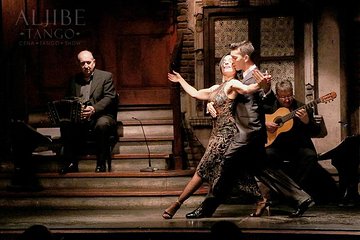
Born in the brothels of Buenos Aires in the late 1800s, tango later went mainstream and remains a beloved tradition. For a grassroots experience of the art form, head to Parque Barrancas del Belgrano, in the Belgrano neighborhood, on Saturday or Sunday evenings around 7pm. That’s when tango aficionados gather in the park’s gazebo, where they set up a small sound system and partner up. Dancers run the gamut—old, young, skilled, novice, dressed to the nines, and decked out in sweatpants—but what they all have in common is an authentic love of tango.
5. Catch a show at Teatro Colón

Step behind the scenes of a world-class opera house.
The Colón Theatre (Teatro Colón) is one of the world’s most spectacular opera houses, and the largest auditorium in South America. Guided tours of the ornate, French-influenced theater, which opened in 1857 and was rebuilt in 1908, offer insights into the architectural styles, materials, and fine acoustics of the building, as well as the long list of virtuosos who have performed there.
For an extra peek behind the curtain, see a century of creations from the Colón Theatre’s workshop at the Colón Fábrica, which opened to visitors in 2021. The expansive warehouse space is brimming with impressive sets, costumes, props, and other elements crafted for the stage, all of which are still designed in-house.
6. Go hungry to the San Telmo Market

There’s plenty to tuck into here.
San Telmo is one of the oldest neighborhoods in Buenos Aires. Work up an appetite exploring the streets, peeking into historic bars, and admiring modern street art. Then head to the San Telmo Market where antique dealers rub shoulders with an ever-increasing range of eating options including some of the best empanadas in the city.
Related: 15 Traditional Argentinean Foods and Drinks To Try on Your Next Trip
7. Visit Palacio Barolo

Combine literature and architecture at this impressive building.
Palacio Barolo, a hulking, 22-story structure that was once the tallest building in Latin America, hides a literary twist. In the early 20th century, business tycoon Luis Barolo hired architect Mario Palanti to design it, seeking to bring Dante Alighieri’s poem The Divine Comedy to life in architectural form, with heaven, hell, and purgatory all represented. Completed in 1923, the elaborately adorned, domed interior is now full of offices, but guided tours reveal its weird and wonderful glory.
8. Catch some sports

Polo is one of Argentina’s most popular and enduring sports.
Although football (soccer) is big in this South American country, attending a game isn’t recommended for outsiders. However, polo can still be enjoyed by anyone. While the sport wasn’t invented in Argentina, the country has produced most of the top players and many of the best polo ponies in the world. Tucked amid high rise apartment buildings in the middle of Buenos Aires is the Campo Argentino de Polo where top players and top ponies face off during world-class matches.
9. Tuck into an Argentina “parrilla”

You can’t skip town without trying this meat-forward classic.
Sorry, vegetarians. Buenos Aires loves beef, and nowhere is that more apparent than at the city’s myriad parrillas (steakhouses). From globally recognized options such as Palermo’s Don Julio, where queues extend round the block on the daily, to places like El Pobre Luis in Belgrano. Whichever one you choose, be sure to accompany your parrillada (mixed grill) or steak with a classic Argentinean red wine.
Related: A Beginner's Guide to Buenos Aires' Parrillas (and Which Ones to Visit)
10. Learn about Argentina’s darkest days

Hear the voices of a longtime movement for human rights.
In 1976, a violent military dictatorship took over Argentina. By the time the dictatorship ended in 1983, tens of thousands of people had been killed and many more abused. Hundreds of torture centers existed in the country, including a military base in Buenos Aires where an estimated 5,000 people were held. This base is now the Memory and Human Rights Space (Espacio Memoria y Derechos Humanos), which offers exhibits including videos of victim testimony during trials—some of which are ongoing.
Did you know?: A solemn remembrance is marked every Thursday afternoon in front of the Casa Rosada, when members of the Mothers of Plaza de Mayo (Madres de Plaza de Mayo) gather to peacefully protest, demanding the return of children killed and stolen during the dictatorship.
Book more things to do in Buenos Aires






Keep planning your Buenos Aires trip


