

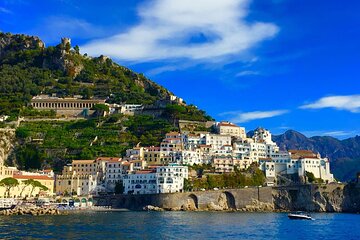
Monuments and buildings on a summer day in Sorrento, Italy.

Things to do in  Sorrento

When life hands you limoncello...

Sun-washed Sorrento charms with its lemon trees and resort-town spirit. Perched on a steep cliff directly above the Mediterranean, this popular seaside retreat is a jumping-off spot for tours to the Amalfi Coast, Pompeii, Mount Vesuvius, and Naples. There are countless things to do in Sorrento without leaving town, however. Its historic center brims with churches, eateries, and shops selling all things lemon-themed—ideal for a sightseeing or food tour on foot. Just below town, beach clubs beckon with cheerful sun umbrellas and loungers lining the waterfront.

Top 15 attractions in Sorrento

Top activities in Sorrento

All about Sorrento

Local Currency
Euro (€)
When to visit

The best times to stay in Sorrento, or enjoy a day in Sorrento, are in spring and fall when the weather is milder, the crowds who flock here in the summer months have departed or not yet arrived, and the town’s charming cafés, restaurants, and hotels remain open (some close early between November and April). Summer, in particular July and August, are packed with action, including the feast day of Sant’Anna and Ferragosto, carnival-like celebrations that bring beach parties, concerts, and fireworks.

Getting around

Sorrento is compact and best explored on foot. Bicycle and scooter rentals—and tours—are popular for traveling further afield along the Amalfi Coast. To get to Sorrento, ferries are your best bet: 40-minute rides from Naples are available year-round (except on off-season weekends), and hour-long rides from Salerno and Ischia are available in summer.

The Circumvesuviana commuter train runs roughly every half-hour from Naples, but it can get crowded and hot during the week. If you do arrive by rail, you can still walk from the train station to the center of town if you don't have too much luggage. It's about 550 meters (.3 miles) from the old town where you can check in to your family run hotel.

Traveler tips

The island of Capri is not far—in fact it’s just across the water from Punta Campanella. Rather than take a ferry or boat tour there, intrepid travelers who want a DIY day trip can rent a gommone—a motorized inflatable boat—and reach the island on their own in under an hour. If the boat is small enough, you won’t need a license. Once there, you can explore the coves, beaches, and grottos only reachable by sea.

en
b9a163b3-11d2-416f-82d7-ec1b55597a8f
attraction_list
People Also Ask
Q:What is Sorrento known for?
A:

Sorrento’s strategic position on the Gulf of Naples (also called the Bay of Naples) makes it an easy gateway to the Amalfi Coast and the rest of the Sorrentine Peninsula. Trains, ferries, buses, and tour groups all converge here, sprinting travelers to Positano and beyond. For Italians, the town is synonymous with its abundant lemon groves—and the limoncello liqueur made from them.

Q:How many days do you need in Sorrento?
A:

One day is enough to see the historic center, stop for olive oil and limoncello tastings, and explore the Museobottega della Tarsialignea, dedicated to local marquetry traditions. The beauty of visiting Sorrento, however, lies in the proximity to the Amalfi Coast, Pompeii, Mount Vesuvius, and Capri—and each requires another full day.

Q:What is the best part of Sorrento to stay in?
A:

If it’s your first trip to Sorrento, stick to the historic center. Piazza Tasso is near accommodations, many restaurants, and public transportation. East of town, Sant’Agnello boasts the best views and cliffside resorts. Those looking for affordable stays should try Priora, a hilly, quiet hamlet about 15 minutes from Sorrento by car.

Q:What can I do in Sorrento?
A:

Plenty. Explore the historic quarter’s tangle of pastel houses and arched lanes. Sample olive oils and limoncello—or gnocchi alla Sorrentina. Take a boat to Capri, a train to Pompeii, or a kayak to Punta Campanella. For something different, Sorrento offers Museobottega della Tarsialignea—dedicated to wood inlaying traditions.

Q:Is Sorrento better than Amalfi?
A:

It depends. Amalfi is smaller, slightly prettier, and more characteristically of the Amalfi Coast—cliffside, terraced roads descend through the town to the elegant waterfront. Sorrento has more public transportation, varied accommodations, and can be less exclusive. It’s a more practical base for exploring the Amalfi Coast and farther afield.

Q:Is Sorrento expensive?
A:

Yes, relatively. It’s more expensive than Naples but less so than Capri and the Amalfi Coast. During the high season, especially from July through August, prices rise as the town swells with tourists. It’s home to designer hotels, but also modest, rustic charms if you look for them.