
Know Before You Go: Visiting the Grand Canyon


A national park. A UNESCO World Heritage Site. One of the Wonders of the World. The Grand Canyon has many titles, and for good reason: It’s one of the most remarkable landforms on Earth. Luckily, visiting is pretty easy—once you’re there, that’s when it gets more difficult. The park is massive (it’s bigger than Rhode Island!), and there’s so much to explore.
Naturally, things to do at the Grand Canyon run the gamut, especially since this park comes loaded with culture and history, too. With this Grand Canyon travel guide, we’ll cover all you need to know to prepare you for a fabulous trip, no matter the season. So if you're wondering how to visit Grand Canyon National Park, here’s where to begin.
What’s the best time to visit the Grand Canyon?

The best time to visit the Grand Canyon is spring or fall, ideally on weekdays.
The Grand Canyon is extremely popular, and like most national parks, the busy season is summer, aka June through August. To avoid the park’s massive crowds, visit in spring or fall (April to early June, and September to November). That will make your Grand Canyon vacation planning so much easier, as lodging will be infinitely easier to get and the traffic much more manageable.
What’s more, in spring and fall, daytime temperatures are much cooler—it can get quite hot in summer, especially at the top of the canyon, limiting when you’ll want to be out exploring.
What should I wear and bring to the Grand Canyon?

Packing for this trip depends on the season you visit, but, broadly-speaking, layers are key.
The temperatures in Grand Canyon National Park vary wildly—in summer, pack sunscreen, a hat, and clothes to keep you cool; in winter, you’ll want that coat, gloves, and wool beanie. But no matter when you visit, always pack layers. You’ll be amazed at how the temperature can change across your elevation, with wind, or even just when the sun comes out. Beyond your closet staples, pack that reusable water bottle, snacks, backpack, hiking poles, and a fully charged camera.
What’s there to do at the Grand Canyon?

There are so many things to do at the Grand Canyon—including relaxing.
Things to do at the Grand Canyon run from A to Z, especially for overnight visitors. For starters, the hiking is world-class—and that can mean an easy trek along the South Rim or trekking from top to bottom via the Bright Angel Trail. Sightseeing and scenic driving, including along Desert View Drive, are also fabulous.
Then there are ranger talks at the visitor center, historic landmarks such as the Desert View Watchtower, and excellent dining, including at the historic El Tovar Hotel. Stay the night there and you can catch the canyon from your window—or go for a morning stroll along the rim, just steps from your door.
What ticket and tour options are available for the Grand Canyon?

Grand Canyon tours offer everything from stargazing to helicopter rides.
Grand Canyon tours really open up what’s possible in the park. While most visitors on their own will go hiking and sightseeing, tours can mean helicopter rides, nature and wildlife experiences, historical deep dives, and more. Imagine going on a “safari” through the Grand Canyon, or even booking a professional photoshoot.
Insider tip: Tours sometimes get you access to areas of the park beyond the crowds—if you’re visiting in summer, aka peak season, this is the way to go.





Where can I find the best views of the Grand Canyon?

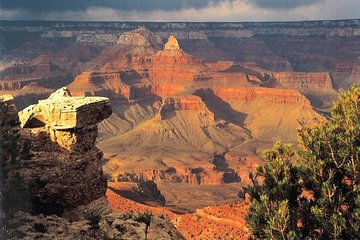
There are a couple of options, but you’ll find the best Grand Canyon views from the sky.
Views abound at the Grand Canyon. If you want to get as close as possible to the view, opt for a guided hiking tour, which will take you below the canyon’s rim. Or, head for the Skywalk, the glass-bottomed bridge that juts out over the edge of the west rim, more than 4,000 feet (1,220 meters) above the bottom of the canyon.
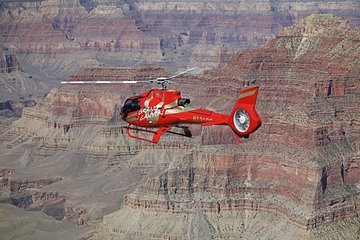
Helicopter and plane flights are also great options for tours that capture the size and impressiveness of the park as a whole, offering panoramic views of the Kaibab National Forest, the Colorado River, and—of course—the Grand Canyon itself.
Is the Grand Canyon accessible for people with disabilities?

Yes, the Grand Canyon is accessible. In fact, it’s one of the most accessible parks in the country.
Grand Canyon sightseeing is about as easy and accessible as it gets. For starters, the South Rim is paved—wheelchairs, scooters, and strollers are commonly found along the flat path, stopping at the various rim overlooks. That means you can exit your vehicles and reach incredible rim views in seconds, exploring the gentle, paved South Rim from there.
The Grand Canyon’s shuttle system is also impressive and wheelchair-accessible, taking visitors from all walks of life throughout the park. And at shuttle stops such as Yaki Point, all you do is get off the shuttle, wander a few feet, and look down.
Frequently asked questions

Everything you need to know about visiting the Grand Canyon.
Do I need a reservation to enter Grand Canyon National Park? No, you don’t need a reservation to enter Grand Canyon National Park. However, you do need to pay the entrance fee ($35/vehicle, good for seven days). With a valid America the Beautiful pass, you’ll get in free.
How many days do you really need for the Grand Canyon? While you can visit the Grand Canyon and have a good time with just a couple hours, to really get a feel for the park, spend two days there. That way you’ll be able to see the park across morning and evening light, plus get in a long hike, a leisurely dinner, or both.
Can I visit the Grand Canyon on my own? Yes, you can visit Grand Canyon National Park on your own, and that’s how most visitors do it. However, you may want a Grand Canyon hiking guide if you’re tackling a difficult hike, like rim-to-rim. You’ll also need to utilize the free park shuttle to access certain areas, including Hermit’s Rest. Luckily, routes are incredibly well-marked and shuttles run constantly.
Find more things to do in Grand Canyon National Park




Keep reading


