All Krakow Tours & Excursions in 2026

1,000+ results

Sort by: Featured

What are people saying about Krakow

Paul_S, Aug 2026
Nearly 60, 135 Metres Underground and 80 Years into the Past!
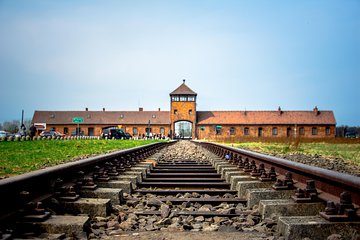
I completed the Auschwitz-Birkenau and Wieliczka Salt Mine tours with my 14-year-old daughter on 13 August 2026. This was not going to be a leisurely hop-on, hop-off sightseeing excursion. It was advertised, quite accurately, as a substantial day — around 10–11 hours — and substantial it certainly was. Our pick-up was at 10.00am which, considering the length of the day and the amount that needed to be fitted in, was probably a little too late. By the time we returned to our hotel at approximately 21.30, both of us were physically and mentally exhausted. Our tour company, Choose Cracow, appointed us what I can only describe as a highly efficient “Mr Fixit”. He took care of the driving, entry and egress from the venues and generally wrangled us in a most efficient manner, ensuring that we could concentrate on the experiences rather than getting lost, missing an entrance, boarding the wrong bus or suffering any of the other minor mishaps that can turn a holiday into an administrative exercise. And for that alone, he deserves some recognition. First Stop: Wieliczka Salt Mine First up was the Salt Mine, which initially surprised me. It is the closer venue to Kraków and, therefore, I had expected it to be on the return leg, with the considerably longer drive to Auschwitz taking place first. However, whatever the logistical thinking behind the order, the Wieliczka Salt Mine was an excellent start to the day. The Salt Mine is a must. I was genuinely surprised by just how fascinating it was. An underground church? Yes. And not just a small underground room with a few chairs and someone optimistically calling it a church. It is an extraordinary and vast underground space. The scale of the mine itself is remarkable, and it is difficult to appreciate quite how extensive it is until you are actually there. We were once again wired for sound and equipped with headphones, allowing our guide to communicate with the group. Our guide was a very intelligent and humorous young man who had clearly polished his delivery over time. His enthusiasm and motivation for the wonders of the mine came through in his witty, knowledgeable and entertaining commentary. You could tell that he enjoyed what he was doing — and that makes a considerable difference. A Word About the Walking... Be prepared. We descended to approximately 135 metres underground, involving more than 800 steps. That, combined with the amount of walking later that same day at Auschwitz-Birkenau over two separate sites, has left me with the calves — if not quite the moves — of Rudolf Nureyev. It is not for the faint-hearted. However, an American gentleman on our tour had apparently undergone double knee surgery within the previous six months and managed the experience with considerable aplomb. So, it can be done. You simply need to know what you are signing up for. And Don't Panic About the Cold Online reviews will warn you about the temperature underground, so I arrived prepared for an Arctic expedition. This was perhaps unnecessary. My daughter and I completed the tour on a 30°C day in August, and the temperature down below was approximately 15–16°C. A T-shirt or light shirt was perfectly adequate. There is, therefore, no need to make a dramatic dash for the scarves when packing for your trip. The Journey to Auschwitz The drive from the Salt Mine to Auschwitz-Birkenau was long and made even longer by roadworks, dense traffic and relatively low speed limits on the roads. This brings me to my one significant gripe with the overall organisation of the day. The tour company contacted me the day before offering packed lunches. When I asked whether a gluten-free option was available due to coeliac disease, I received a fairly definitive: “No. We do not offer this as an option.” Unfortunately, this was broadly representative of my experience during the week I spent in Kraków and the surrounding area. The city appears to be something of a tale of two halves when it comes to coeliac disease and gluten-free requirements. You either encounter people who are accommodating, knowledgeable and genuinely helpful... Or you receive the sort of expression normally reserved for someone who has just announced that they have wet leprosy and would like to share it. There appears to be very little middle ground. Now, to Auschwitz-Birkenau When deciding where to visit for my holiday this year — and where to spend my 60th birthday — I was keen not to do the traditional beach-and-pool holiday. There is absolutely nothing wrong with those holidays, of course, and they are often the easiest option when travelling with children. However, I wanted to do something different. My daughter is 14 — nearly 15 — and has chosen GCSE History as one of her options. She is genuinely interested and enthusiastic about history, and we regularly have discussions about historical events and their social, economic, geographical, political and, most importantly, human consequences. I completed and passed an O Level in History myself, although that was back in... Well... History, really. The visit to Auschwitz-Birkenau was, therefore, one of the primary drivers behind our trip to Poland. During my late teens and early twenties, I worked extensively in Israel, including on Moshavs near the Lebanese border, in Rishon LeZion and Nativ HaAsara in the Hof Ashkelon region. While there, I visited Yad Vashem in Jerusalem. Visiting Auschwitz-Birkenau with my daughter was something I wanted to do in order to further understand — together with her — the disgraceful treatment of human beings by fellow human beings. This was not some distant, mythical age. It was approximately 80 years ago. That fact alone should give anyone pause for thought. Auschwitz I When we arrived, the first thing that struck me was that the entrance and arrival area were not at all what I had expected. The area used by buses, taxis and coaches was carefully manicured and modern, complete with toilets and vending machines. There were a great many visitors when we arrived, but our Mr Fixit driver and guide ironed away any pre-entry wrinkles, and we were efficiently guided through the process. Once again, we were wired for sound and given headphones through which our guide could communicate with us. We began at Auschwitz I. The site had originally been Polish Army barracks, and the orange-red brick and concrete buildings looked surprisingly modern in some respects. I live in an Edwardian red-brick house in England that was built in 1905, so encountering buildings of a similar visual style created an unexpected connection. In my admittedly limited experience of Poland, I had not particularly expected to encounter so much of the familiar red brick architecture that I associate with home. Then came the iconic gate. “Arbeit macht frei” — “Work sets you free.” It was the first of many deeply sobering experiences that day. I could list everything we saw and experienced, but this review would rapidly become an epic, and I suspect you are not reading this in anticipation of War and Peace: The Holiday Review. I am a humanist and have always encouraged my children to follow their own beliefs, thoughts and conclusions. I was particularly interested, therefore, in sharing this experience with my daughter and allowing her the opportunity to interpret and process it in her own way. Differentiation and nuance mean a great deal to me. Being afforded both the mental and physical space to experience this kind of intense sensory and emotional input is, in my opinion, imperative. My daughter discussed the visit with me both during the day and afterwards, including on the coach back to our hotel. The level of reflection and discussion that the experience prompted made the visit worthwhile in itself. However, I would probably encourage visitors who want more space for reflection to consider avoiding the height of the summer season. The crowds can be substantial. You are moved through the site in groups, guided, shepherded and, at times, inevitably aware of the next group waiting to follow in your footsteps. For me personally, it can be difficult to process something of this magnitude within what can feel like a relatively small window of time. You want to stop. You want to look. You want to think. And sometimes you simply want to stand still. But there is another group behind you. That is, of course, the practical reality of allowing large numbers of people to visit such an important historical site. It is not a criticism of the need to manage visitors, merely an observation that such an experience deserves time and space to process. What affected me most was the knowledge that I was physically retracing the steps of people who had been placed in such horrific circumstances by their fellow human beings. For me, there was a palpable sense of the past remaining within those places. Whether you would describe that as atmosphere, memory, energy, ghosts or something else entirely depends upon your own beliefs. But I felt it. Birkenau The Birkenau site is approximately 3km away, so we travelled there by bus. And enormous does not really begin to describe it. The site covers approximately 150 hectares, and its scale is one of the things that makes the experience so difficult to comprehend. You see the railway sidings and the points where the selection process took place directly from the transport wagons. Standing there, knowing what occurred, is an enormously sobering experience. Even the most stoic person would, I believe, struggle to remain unmoved. We saw the remains of the gas chambers and crematoria and were shown inside one of the brick-built barracks. By this point, the physical and emotional weight of the day was considerable. One small aspect that I personally found uncomfortable was the commercial environment surrounding the site. There is a shop in the car park, which I found extremely expensive, and a bistro. There are also food stands situated between the car park and the Birkenau site. I appreciate entirely that visitors need facilities and that people working and travelling need to eat. Nevertheless, personally, I found the proximity of commercial food outlets to a site where so many people suffered and died from starvation difficult to reconcile. Others may see this differently, but that was my reaction. Was It Worth It? By the end of the day, my daughter and I were both physically and mentally exhausted. It is a long day — approximately 10–11 hours — involving a considerable amount of walking, travelling and, particularly at Auschwitz-Birkenau, confronting evidence of unimaginable human suffering. The journey back was noticeably quieter. There were approximately 12–15 people on our tour, predominantly Americans, with my daughter and me being the only Brits. By the end of the day, conversation had become somewhat muted and stilted. I suspect we were all processing what we had seen. We eventually returned to our hotel at approximately 21.30. Was it worth it? Yes. Would I recommend it? Yes. Choose Cracow ran the entire day with admirable precision and professionalism. Having someone else take care of the driving, parking, entrances, timings and logistics allowed us to focus on the experiences themselves rather than worrying about how we were going to get from A to B — and then to C, D and back to A again. For a visitor unfamiliar with Poland and the transport and entry arrangements, I think that has significant value. Auschwitz-Birkenau is also a very guide-driven experience. It could undoubtedly be undertaken independently, but attempting to dovetail transport, entry arrangements and timings in a country you are unfamiliar with could add unnecessary stress to what is already a very emotionally demanding day. If I had one observation about the Auschwitz-Birkenau experience itself, it would be this. You see where these poor people suffered so deeply and so horribly. You see the buildings. You see the sites. You see the physical evidence. But, for me personally, I felt that there could perhaps be more emphasis on bringing the day-to-day human reality of being a prisoner to life. Yad Vashem, in my experience, is particularly effective at creating a deeply personal understanding of the individual human stories behind the Holocaust. Auschwitz-Birkenau is, understandably, overwhelming because you are physically standing in the place where these events occurred. Nothing can replace that. However, I came away feeling that the experience could perhaps be enhanced by more directly connecting visitors to the individual lives, routines, fears, suffering and humanity of the people who were imprisoned there. Because ultimately, that is what must never be lost. The numbers are so vast that they can become almost impossible to comprehend. But every number was a person. Someone's child. Someone's parent. Someone's friend. Someone who, like the rest of us, had hopes, fears, relationships, interests and a life. And perhaps that is the most important lesson my daughter and I took away from the day. Not simply what happened. But that it happened to people. Eighty years is not a long time. And understanding what human beings are capable of doing to one another remains just as important today as remembering what happened then. It was not an easy day. It was not always comfortable. It was certainly not relaxing. But it was important. And yes... I would do it again.
Jamie_F, Aug 2026
Great, informative tour, well organised, great price.
Efficient and well organised. We arrived and departed on time, no issues with any instructions from our guide. The bus was comfortable and air conditioned which was great as it was 33 degrees C on the day of our visit. The only minor issue was that the video player wasn't working so we couldn't watch the introductory film ahead of the visit, I'm not sure how much this adds to the visit but we didn't feel like we needed it as the tour itself was really informative. Recommended, would use this Tour Operator again without hesitation. Thanks!
Timothy_G, Aug 2026
Fantastic trip, well worth the money
This was an extremely enjoyable event. Our guide and driver, Thomas, was very professional, knowledgeable, and friendly young man. All timings were maintained and no issues through the entire day. Thomas also provided us all will tips for restaurants and other places to visit on krakow and surrounds. Highly recommended.
William_R, Aug 2026
Well organised and run
A really well run trip, great communication from Patryk, time of pick up was in advance and came on time as stated. And on completion of the tour, taken back to exact place we were picked up from. Advance Tickets straight in and our guide around both camps, Helena was so knowledgeable. As for the trip, harrowing, somber, a mix of emotions, but a trip that everyone should do.
en
ca7f5a99-62ac-49ae-a0c0-9b83cf457b7e
things_to_do

With its medieval architecture, thriving nightlife, and storied past, Krakow often feels like a contradiction. Krakow tours help you understand the city's complex, vibrant soul. Join an expert guide to hear local history on a tour of the UNESCO-listed Old Town and Wawel Castle, learn more about the darker spans of history on a tour of the Auschwitz-Birkenau Museum, or live it up while bar-hopping in Krakow’s hottest neighborhoods. No matter what you choose, Krakow tours can help you see the city through a new lens.