Tourists at Mingsha mountain and crescent moon scenic spot in Dunhuang City.

Things to do in  Dunhuang

Desert fun starts here

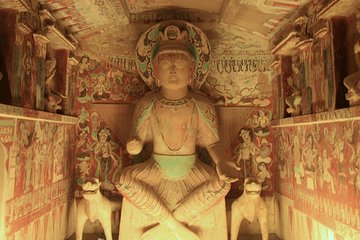
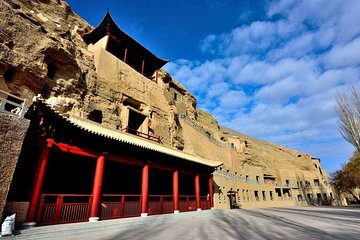
When exploring Dunhuang, you'll have no lack of things to do. Explore the ancient Silk Road route, see some of China’s oldest Buddhist art at Mogao Caves, and slide down huge sand dunes. Enjoy the best of the Gobi desert, like camel riding, visiting Crescent Moon Pool, and browsing and eating at the night market. There are plenty of experiences in Dunhuang and its surrounding areas, so it’s not to be missed.

Top 2 attractions in Dunhuang

Top activities in Dunhuang

All about Dunhuang

Local Currency
Chinese Yuan (CN¥)
When to visit

Aim to visit Dunhuang from May to October. The weather is best in these months. It is bitterly cold in winter, something to consider if you travel in that season. It is very dry in Gansu province. In summer, it gets hot, but it's dry, not humid. Just make sure to take breaks from the sun and hydrate.

Getting around

It’s easy to get to Dunhuang by train from other major cities. Once there, you can use public buses if you feel comfortable navigating the language. Tourist buses focus on heading to popular sites like Mogao Caves and the Singing Sand Dunes, so they could be a little more manageable to navigate. The easiest way to get around is with a private tour and driver, which provides the most flexibility.

Traveler tips

Dunhuang is a primarily Muslim and Buddhist area, so make sure to dress respectfully when you’re out and about. The heat can be extreme in summer. Ideally, you'll wear long, loose clothing made of cotton, linen, or a moisture-wicking material that covers your shoulders and knees. You may see locals, especially youth, wearing more revealing clothing, but it's best to be courteous of the majority and dress modestly.

en
904411a0-156b-4547-a670-c8b02adc2339
attraction_list
People Also Ask
Q:What is Dunhuang known for?
A:

Dunhuang was the most western trading spot along the Silk Road in China. It was a hot spot for cultural, commercial, and religious exchanges. The Mogao Caves, a huge collection of Buddhist art in more than 500 caves, are a highlight. Ruins of the Great Wall of China are here.

Q:What kinds of tours go to Dunhuang?
A:

The multi-day Silk Road tours mainly stop in Dunhuang. These can be private or group tours, taking foreign and Chinese tourists. Often, they have Dunhuang as a base for several nights, and the city acts as a hub for exploring surrounding sites like Mogao Caves and Singing Sand Dunes.

Q:Is Dunhuang good for families?
A:

Not really. It's a journey to get to Dunhuang, and you'll spend time in the car driving to the different sights. Kids might like camel riding or surfing on sand dunes, but Buddhist art and other geographical formations might not be so interesting.

Q:How much time do you need in Dunhuang?
A:

Plan on spending around three days and two nights in Dunhuang. This way, you can have a base for a few nights while taking day trips out to the caves, singing dunes, Crescent Lake, and more. You can also visit sites on your way into or out of town.

Q:What is the Dunhuang night market?
A:

Make sure to head to the Shazhou Night Market in Dunhuang for some tasty eats and plenty of souvenirs to purchase. Artisans put their wares on display, some coming from Xinjiang. You can also try local noodle dishes and plenty of spicy grilled meat on sticks.

Q:Is the trip out to Dunhuang worth it?
A:

Yes, Dunhuang is worth it, especially if you’re into history and want to learn about different religions and their cultures in China. There is much to see, from Buddhist art to spectacular natural sand formations. The climate is harsh, though, so be prepared for sun, sand, and wind.