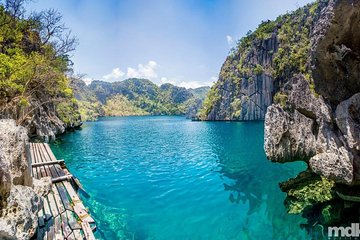
Scenic view of Twin Lagoon in Coron, Philippines

Things to do in  Coron

Where divers get wrecked

In the Calamian Islands, the name Coron can mean three things: Coron Town, the Calamians’ most important town, Coron Island, an island across the water from Coron Town, and Coron, a government district. Most foreigners, however, call the whole area Coron. Here tranquil lagoons, white sand beaches, and World War II shipwrecks draw scuba divers and snorkelers alike. Most of the best things to do in Coron involve water, be that snorkeling the Lusong Gunboat Wreck, playing castaway on pristine Pass Island, or diving temperature-changing Barracuda Lake.

Top 11 attractions in Coron

Top activities in Coron

All about Coron

Local Currency
Philippine Peso (₱)
When to visit

Diving, snorkeling, sun-baking, and island-hopping are all at their best in Coron’s dry season, which typically runs from mid-November to mid-May, with January through April the sunniest. As usual for the Philippines, accommodation prices soar over the Christmas, New Year, and Easter vacation peaks, when popular lagoons and islands fill up.

Getting around

Ferries link the largest islands of the Calamian archipelago—Busuanga, Culion, and Coron—but most island-hopping trips are on shared tour boats or private charters. For land transportation, it’s easy to rent a scooter if you have your motorbike license, while shared shuttles run from the airport. Rideshare apps have yet to reach Coron, so tricycles are your best option for short hops, or you can book tours or charter a car or van.

Traveler tips

Coron’s Sunken Japanese Wrecks are a scuba mecca, but it’s important to explore within safe limits. Only the Japanese Freighter, Okikawa Maru, East Tangat Gunboat, and Lusong Gunboat are partially or fully accessible for open-water divers who are licensed to a maximum of 60 feet (18 meters). You should never penetrate a wreck without specialist wreck penetration training and equipment, including spares. Proceed with caution and book with a reputable agency for your own safety.

en
b27e5fe1-c903-4024-a7ed-bf3b1629df6f
attraction_list
People Also Ask
Q:How many days in Coron is enough?
A:

That depends. Serious scuba divers usually want to spend seven days, which gives them time to experience the main sites over five days’ diving, take one island-hopping tour, and explore inland Busuanga a little. Three or four days allows time to take two island-hopping tours and also visit Mt. Tapyas.

Q:Is Coron Town worth visiting?
A:

No, Coron Town itself is not worth visiting: It’s what lies around the town that’s special. But whether you arrive in the Calamians by plane or ferry, you’ll start in Coron Town, and you’ll likely find yourself coming through for island-hopping adventures, lagoon swims, hot springs, mountain hikes, and more.

Q:What is Coron best known for?
A:

Coron is best known for lagoons, beaches, island-hopping, snorkeling, and diving—particularly the fleet of Japanese warships sunk here in September 1944. Barracuda Lake, Twin Lagoon, Kayangan Lake, and the Lusong Gunboat Wreck appeal to snorkelers; advanced divers love huge wrecks like the Akitsushima seaplane tender and the Okikawa Maru tanker.

Q:Which is best: El Nido or Coron?
A:

It depends. Both El Nido and Coron offer spectacular landscapes and island-hopping. Coron is less developed than El Nido, which is ideal for travelers seeking an off-the-path feel. The Sunken Japanese Wrecks are world-class dive sites, so scuba junkies should pick Coron; gourmets and luxury lovers should hit El Nido.

Q:What month is best for Coron?
A:

February, when it's well into the dry season, is the best month to visit Coron. You can expect dry, hot, sunny days with decent visibility for diving and snorkeling. But you’re outside the New Year and Easter peaks so prices for accommodation are reasonable and dive sites aren’t too crowded.

Q:Is it expensive in Coron?
A:

No, Coron is not expensive by Philippines standards. You can get a dorm bed in Coron Town for a few dollars a night, and there are plenty of cheap eats, too. However, the main things to do are diving, snorkeling, and island-hopping, which might stretch a typical shoestring budget.