
Humayun's Tomb Tours and Tickets
600+ results
Sort by: Featured






What are people saying about Humayun's Tomb

Ailish_M, May 2026
12/10 - Great Tour!!
Our tour guide, Manu, was absolutely amazing!!!! He answered all of our questions, he was so knowledgeable about the sights that we saw and culture in general. He went above and beyond to make sure that we were comfortable, cared for and enjoying the experience. If you have a free day in Delhi, I cannot recommend this tour enough!!!!

Sheeny_P, May 2026
Incredible
I wish I could give more than 5 stars. Manu was an excellent tour guide who made us feel welcome, took photos of us in the best spots, and gave us detailed history about the sites and India. Sunil was a fantastic driver. This was a perfect way to spend our one free day during our business trip.
Aryanna_B, Oct 2025
Perfect morning out!...
Perfect morning out! Lovely guide and driver very well-versed all questions were answered - highly recommend!
Kirk_H, Mar 2026
FANTASTIC day tour of UNESCO sites in New Dehli
I want to make the highest recommendation for booking this day tour in New Dehli with The Wanderers Tour company (Day Tour Dehli), whom I found through Viator. Their guide and driver were both terrific, but best of all the company is very flexible and accommodating in crafting a tour for you that meets your wishes. And the price for a private tour was very good as well.
I flew to New Dehli from the US, arriving at 1:20 am. This was a day before my regular guided tour of northern India officially started. I had two objectives – I didn’t want to sit in my lovely hotel all day, and also I wanted to find a great day tour of the city that covered some tourist attractions that would not be covered by my regular guided tour.
I chose the day tour with The Wanderers Tour company (Day Tour Dehli) of the Red Fort, Humayun Tomb & Qutb Minar, all UNESCO sites. One problem was that my regular tour was also going to Qutb Minar the next day. The second problem was that I really wanted also to visit the famous “Friday Mosque” or Jama Masjud from the 1500s, which was in walking distance from the Red Fort.
The Red Fort was listed as the last place we would visit. I contacted the company and asked if I could leave the tour at the end to walk to the Friday Mosque and then take an Uber back to the hotel. (In retrospect, not a great idea given New Dehli traffic).
The company was so accommodating – it turned out this was a *private* tour and not a small group tour, and so they rearranged the tour to drop Qutb Minar (also a wonderful place) and add the Friday Mosque instead, plus they added a very interesting “step well” near my hotel. I was allowed to pick the start time (10 am), they were exactly on time, and we wrapped up around 4:30 pm. I managed to see four wonderful places, and then could swim and rest at my hotel later that day to get ready for my regular tour the next day.
So I VERY MUCH RECOMMEND this tour (the sites visited can be modified as you wish) and the company, guide, and driver. Really a wonderful introduction to four important places in New Dehli.
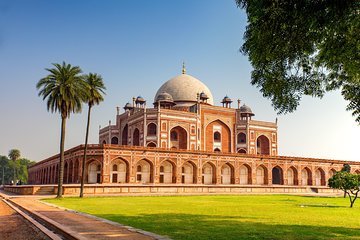
Humayun's Tomb

Humayun's Tomb is a must-visit for history buffs and anyone with an interest in architecture.
Wear comfortable shoes and sun protection, as the complex is fairly large.
Humayun’s Tomb is wheelchair accessible.
There’s a fee to film here, but it’s aimed at professionals; if you’re just filming with your phone, you’re unlikely to catch any flack.
People Also Ask
What’s the best way to experience Humayun's Tomb?
How much does it cost to visit Humayun's Tomb in 2026?
Is Humayun's Tomb worth visiting?
What is the historical significance of Humayun's Tomb?
How do I reach Humayun's Tomb from central New Delhi?
What are some unique features of the gardens surrounding Humayun's Tomb?
What architectural styles can I see in Humayun's Tomb?
Can I take guided tours of Humayun's Tomb?
How does Humayun's Tomb compare to other Mughal-era monuments in India?
What are the best attractions in New Delhi other than Humayun's Tomb?
More Tours in New Delhi
Things to do near New Delhi
More attractions near New Delhi